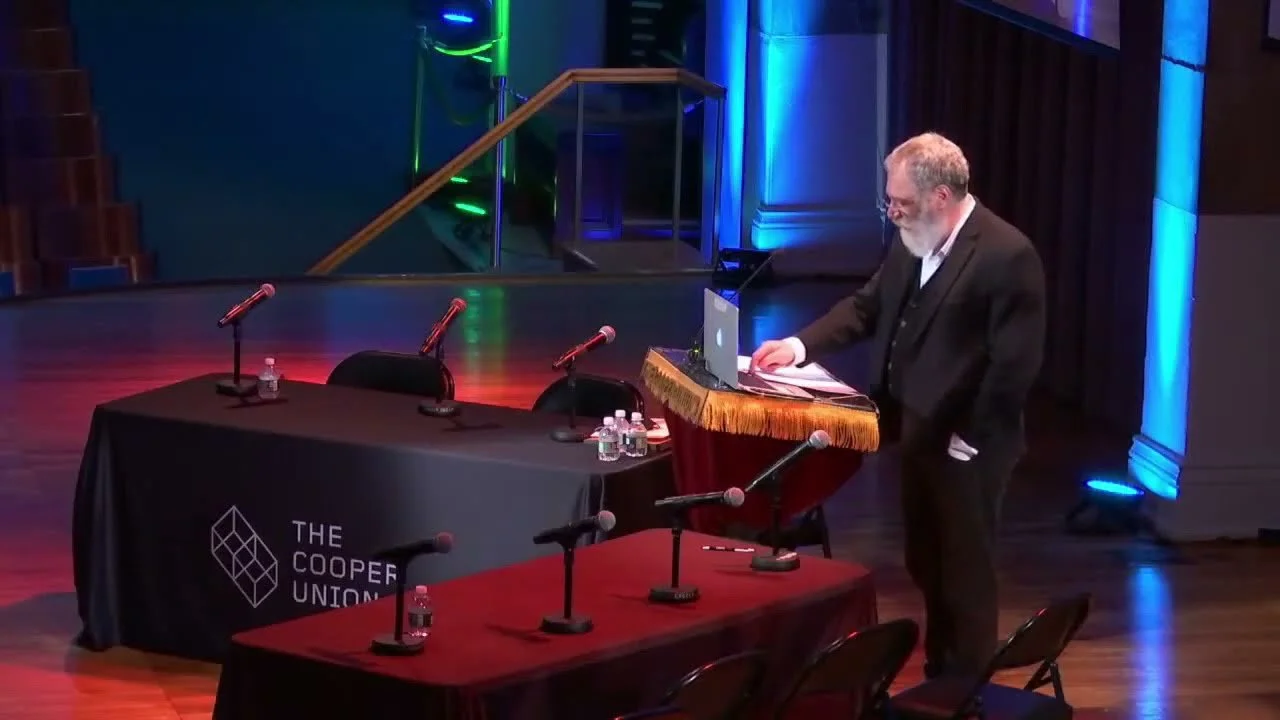
DAVID GERSTEN
Long Tone: Thesis Studio with David Gersten
A New Cross-Disciplinary, Immersive Thesis Studio
October 13, 2026 – Ongoing
Tuesdays, Wednesdays & Thursdays | Tuition from $2,800
/details
There is now an urgent need for exploratory works of ethics and imagination, and it is for all of us to find the questions, works, and movements of our time; to listen to unheard voices, to search for unknown linkages, to ask questions that have not yet been imagined, and to create transformations that embody our best hopes and aspirations. Long Tone: Thesis Studio with David Gersten is a space for exploratory, uncontainable, and independent works ignited by the poetic imagination: works that heighten and expand our spatio-material imaginations. It is a space of inquiry into the human condition and a place for creating the world anew.
Long Tone opens the door to a larger initiative: a cross-disciplinary studio experience in which participants construct their own curriculum as a situation, inhabited, embodied, and grown across time. This is the first of many programs that, together, will begin to shape a new kind of year-round school: an interdisciplinary, immersive space for making, thinking, and listening. These programs will take form as onsite, online, and hybrid semesters, seasonal intensives, and long-form studio experiences, each contributing to the construction of a school built not from institutional protocols, but from people, works, ideas, and atmospheres. Unaccredited by design, this evolving school offers a new paradigm for education, one rooted in rigorous inquiry, situated practice, and shared creative transformation.
WHEN: February 14 – May 2, 2026 | Tuesdays, Wednesdays & Thursdays
WHERE: In person at the Main Studios, Arts Letters & Numbers | 1548 Burden Lake Road, Averill Park, NY
FORMAT: Twelve-week interdisciplinary thesis studio combining independent creative practice, individualized mentorship, group listening sessions, and interdisciplinary seminars.
COST: Free and open to the public.
-
The students are the curriculum. Long Tone is a cross-disciplinary studio experience in which participants construct their own curriculum as a situation, inhabited and embodied through their interests, curiosities, and questions. The studio is a site of exploration and transformation, an atmosphere within which one can excavate their questions. Whether your medium is paint, movement, language, light, sound, wood, steel, or code, this program is a place to inhabit your work, to create your site, and to build the conditions of perception, understanding, and transformation.
Below is a framework of ideas that can be understood as a starting point:
1. On Language and Shared Questions: We Share Words
We share words, and they move between us. We all collectively participate in an agreement of language, a shared exchange that allows us to communicate with one another and with ourselves through both speech and writing. The consensus of language is an agreement that makes room for disagreement. It reflects the reality that speech is a shared structure of communication that also supports individual expression. This dual nature reveals the profound and inseparable connection between language and ethics. When language acts not only as a tool for communication but as an invitation, it begins to emerge both within us and between us.
2. The Studio as Site and Situation: On Spatial Imagination
“I have often felt, while fighting in the middle of the night to keep drowning lungs afloat or to stanch a flow of blood, that the room about me was participating in the struggle, how more than once the walls gasped, then stood still at the instant of death.” — Dr. Richard Selzer
The room that “participates in the struggle” reveals space as an active participant in our thoughts and actions. This opens the possibility for a communicative exchange between our inner lives and the environments we inhabit. These exchanges do not only arise in moments of life and death. They also appear in quiet gestures, expressing our vulnerability and sensitivity. The exchange between ourselves and the world is reciprocal. As we build the room, the room builds us. The spaces we shape also shape us. They influence us with their structure, their materials, and their character. The studio, in this sense, becomes a constructed situation. It is a site of perception, transformation, and presence.
3. The Studio as Site and Situation: On Material Imagination
We cannot limit our questions to those that can be asked in words. While we aim to use language to express our thoughts, not every inquiry can be spoken. To restrict our questions to what we can verbalize would narrow the range of understanding. We would be setting aside vast and ancient forms of knowing. Some of our most subtle and profound questions do not live in language. We feel them, we sense them, and we experience them in ways that come before words. The situations in which we ask these questions have a strong influence on the kinds of understanding that can emerge. The studio is a space where this kind of embodied, pre-verbal inquiry can take shape.
4. Towards Seeing, Not Showing
We do not draw in order to show; we draw in order to see. This shift in focus transforms drawing into a process of discovery rather than projection. The studio becomes a site of receptivity and attention, where the act of drawing is shaped by the specific atmosphere we inhabit. Our questions and materials interact, forming something that belongs to both the world and the self. This way of working invites understanding that is not imposed but revealed. As the drawing unfolds, so too does our perception. We begin to see more clearly, and the studio itself becomes part of that transformation.
5. Listening as a Form of Imagination
Exploration begins with curiosity. Some questions arrive with urgency, while others come as gentle murmurs. All of them matter. A creative environment must allow these questions to surface and be heard. People are changed when they are truly listened to. Building an atmosphere of trust, where individual interests guide the process, is vital. The act of listening is not only a method, it is the foundation of the school. This is where learning begins.
6. Towards an Of-ness and Is-ness of Drawing
Every drawing holds two conditions: it may be a drawing of something, like a tree, a figure, or a structure, but it also is something. It has a material presence, a physical form, and a spatial reality. A drawing is not only representation, it is also action and matter. Like the voice, which joins breath with language, drawing joins content with substance. The drawing’s of-ness and is-ness coexist. When these qualities resonate, the drawing gains tone and presence. It speaks. This is where our questions begin to live. It is also where we begin to form ways of working that bring together material thinking, poetic insight, embodied understanding, and expression.
7. Where Do We Know What We Know? Inhabiting Our Questions
Someone may read extensively about playing the violin, learn its history, or even construct one by hand. But none of this makes them a violinist. The knowledge of playing is not in the text. It is in the arm, the fingers, the ear, and the breath. It is physical and practiced. This leads to a deeper question, not just how we know what we know, but where that knowledge lives. Where is the knowledge of painting, of physics, of dancing, of conversation? The studio offers one possible answer. It is a space where understanding takes form through action and presence. It is a place where new ways of knowing can be brought into being.
-
The program is structured around three core weekly components, outlined in more detail below. Together, these components form a comprehensive framework for sustained and immersive studio practice. This includes individualized mentorship, collective inquiry, and expansive interdisciplinary engagement. The rhythm of these elements creates the conditions for participants to build their studio as both a personal site and a shared situation.
Studio Visits
Studio Visits are one-hour, weekly, one-to-one sessions with David Gersten. These meetings form the core of the program’s individualized and ongoing mentorship model. They are not institutional critiques or formal check-ins. Instead, these are reflective and open conversations shaped by the participant’s evolving questions and creative process. Whether participants bring drawings, writings, constructions, performances, readings, or loosely formed thoughts, these sessions offer time to explore ideas in depth. Over the course of the program, the studio becomes understood not only as a physical place but as a situation shaped by perception, intention, and presence. This is where a thesis begins, not as a fixed concept or a deliverable, but as a lived inquiry developed through conversation and care.
Listening Non Critiques
Listening Non Critiques are weekly, three-hour group sessions where all Long Tone participants come together to share work, questions, and ideas in an environment of attention and openness. These sessions are not organized around critique or correction. Instead, they emphasize listening as a creative and generative practice. Participants may share in any form they choose, including discussion, gesture, silence, readings, early sketches, or performance. The focus is on what a work reveals, what it invites, and what questions it raises, rather than on how it might be evaluated. Every voice helps shape the tone and direction of the group studio. Listening becomes a shared methodology that supports mutual recognition, creative risk, and collective growth.
Seminar
Seminar is a two-hour weekly session led by David Gersten. It offers a wide ranging and interdisciplinary space for shared inquiry. Rather than following a fixed syllabus, the seminar moves freely through over fifty thousand years of human thought and expression. It draws from areas such as art, architecture, literature, film, theater, music, science, mathematics, technology, philosophy, politics, and religion. The purpose is to open questions and draw connections between individual practices and larger intellectual, historical, and cultural frameworks. Participants are invited to situate their own work in this broader landscape, discovering new perspectives and relationships. The seminar helps develop a shared vocabulary and critical foundation, while allowing new ways of seeing and thinking to emerge through the group’s collective presence.
-
Long Tone: Thesis Studio with David Gersten is open to all people pursuing any discipline or mode of expression. It is designed for individuals at a pivotal moment in their creative or academic life. It is particularly suited for, though not limited to:
Those entering the final thesis or dissertation year of academic studies (whether undergraduate or graduate)
Those who have recently completed a degree and are looking to delve further into or beyond the cumulative project they worked toward
Those who have been away from their creative practice or taken time away from formal education (for example, a leave of absence, a pause in studies, time off to reflect and regroup) and are looking to reconnect with their work in a meaningful way
The program welcomes artists, makers, and thinkers of all kinds who bring with them a project, a question, or a body of work they are ready to explore more deeply. Participants may arrive with something completely undefined, just beginning, mid-process, or nearly complete. Regardless of stage, the program offers a space to reexamine and reengage, to explore new readings and directions, and to move the work toward a more resonant form.
Open to practitioners across disciplines, including visual arts, performing arts, architecture, literature, film, design, music, and the humanities, the invitation is to construct a studio of your own. This is a space to inhabit your questions, to shape the conditions of your practice, and to build the room that builds you.
-
The total cost of the program reflects an eleven-week immersive experience at Arts Letters & Numbers, combining housing, studio access, shared meals, seminars, critiques, one-on-one sessions with David Gersten, and guest artist workshops.
Tuition Breakdown:
Program Fee: $2,800
Covers seminars, critiques, individual studio visits, guest artist workshops, and access to all ALN campus facilities.
Housing & Studio Package (includes one communal meal per week):
$3,000 — Shared Room
$4,000 — Private Room
Total Cost (11-week program):
$5,800 — Shared Room
$6,800 — Private Room
A limited number of scholarship positions are available. If you would like to be considered, please indicate this clearly in your application and include a brief note about your financial need.
-
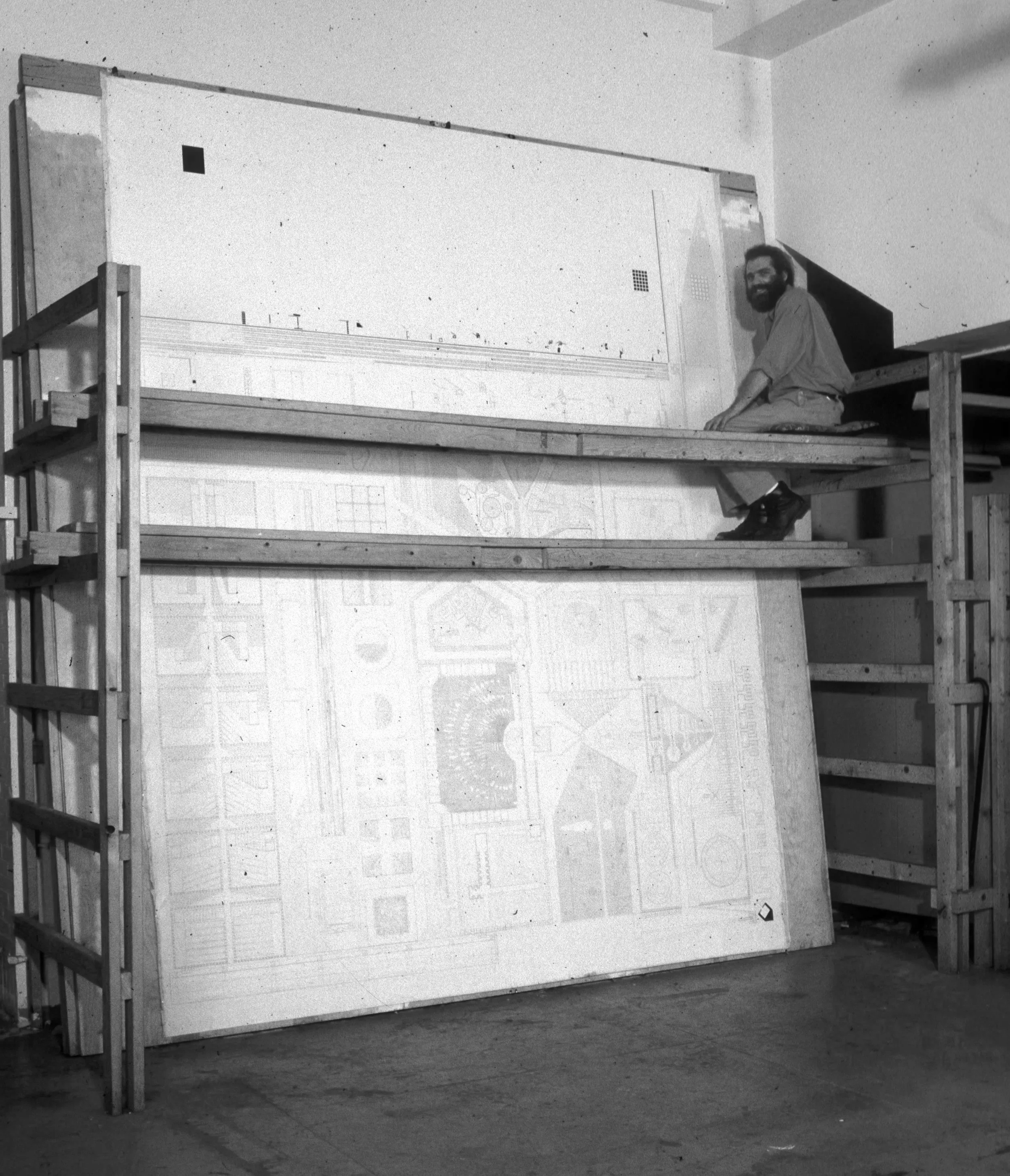
David Gersten is an internationally recognized artist, architect, writer, and educator whose work spans drawing, writing, film, performance, pedagogy, and the creation of new cultural and educational infrastructures. Based in New York City, he is the Founding Director and President of Arts Letters & Numbers, an international nonprofit organization dedicated to expanding the experiences understood as education through studios, workshops, residencies, youth programs, mentorship initiatives, exhibitions, performances, and global collaborations at its campus in Averill Park, NY, and around the world.
An alumnus of the Irwin S. Chanin School of Architecture at The Cooper Union, Gersten served on its faculty from 1991 to 2025, holding roles including Distinguished Professor of Architecture, Associate Dean under Dean John Hejduk, Acting Dean, Director of Interdisciplinary Learning, Director of the Civic Projects Lab, and Program Director for Cooper Union's 165th Anniversary Celebration. His teaching fostered collaborations across the Schools of Art, Architecture, Engineering, and the Humanities, shaping generations of students through studio-based, interdisciplinary learning.
Gersten's educational work extends globally. He has been a visiting professor at institutions across the United States, Europe, Asia, and South America, including engagements at the Rhode Island School of Design, the Central Academy of Fine Arts in Beijing, Aarhus School of Architecture, Brown University, and the United Nations International School. He has delivered keynote addresses at the Power Station of Art in Shanghai, the Chinese University of Hong Kong, the Venice Architecture Biennale, UNICEF EXPO in Kazakhstan, CAFA's Chancellors Summit, Big Picture Learning, Reggio Emilia's international conference, and numerous universities and cultural institutions. He also codirected a collaboration between UNICEF's Office of Innovation and Arts Letters & Numbers on "Information Poverty: Scarcity in the Age of Distributed Communications," bringing together leaders working at the intersection of technology, art, education, and social justice.
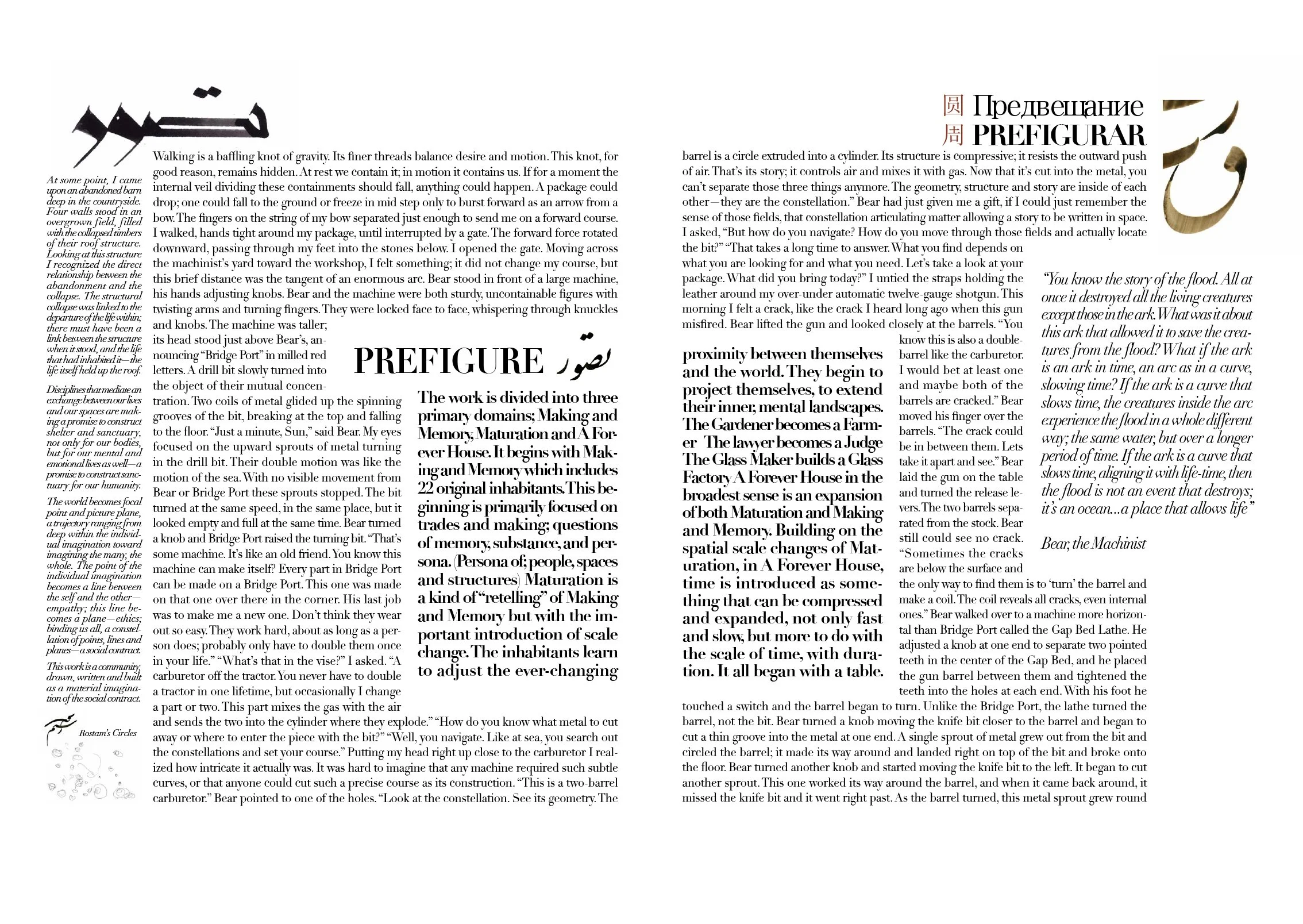
Gersten's creative work—including drawings, stories, essays, films, performances, and buildings—has been exhibited internationally and is held in the collections of the Canadian Centre for Architecture, the New York Public Library, and private collections around the world. His long-running project Hunting Life; A Forever House, comprising more than 200 stories and architectural drawings, has been exhibited widely and published by Éditions Firmin-Didot in Paris. He has directed or codirected numerous films and performances, often in collaboration with filmmaker Bill Morrison and composer Michael Harrison, including 24 Hours @ Once, Galapagos In C, Oppenheimer's Table, Suddenly a Chora, Hinges Mirrors and Eclipses, Zoetrope Sun, and Constitution.
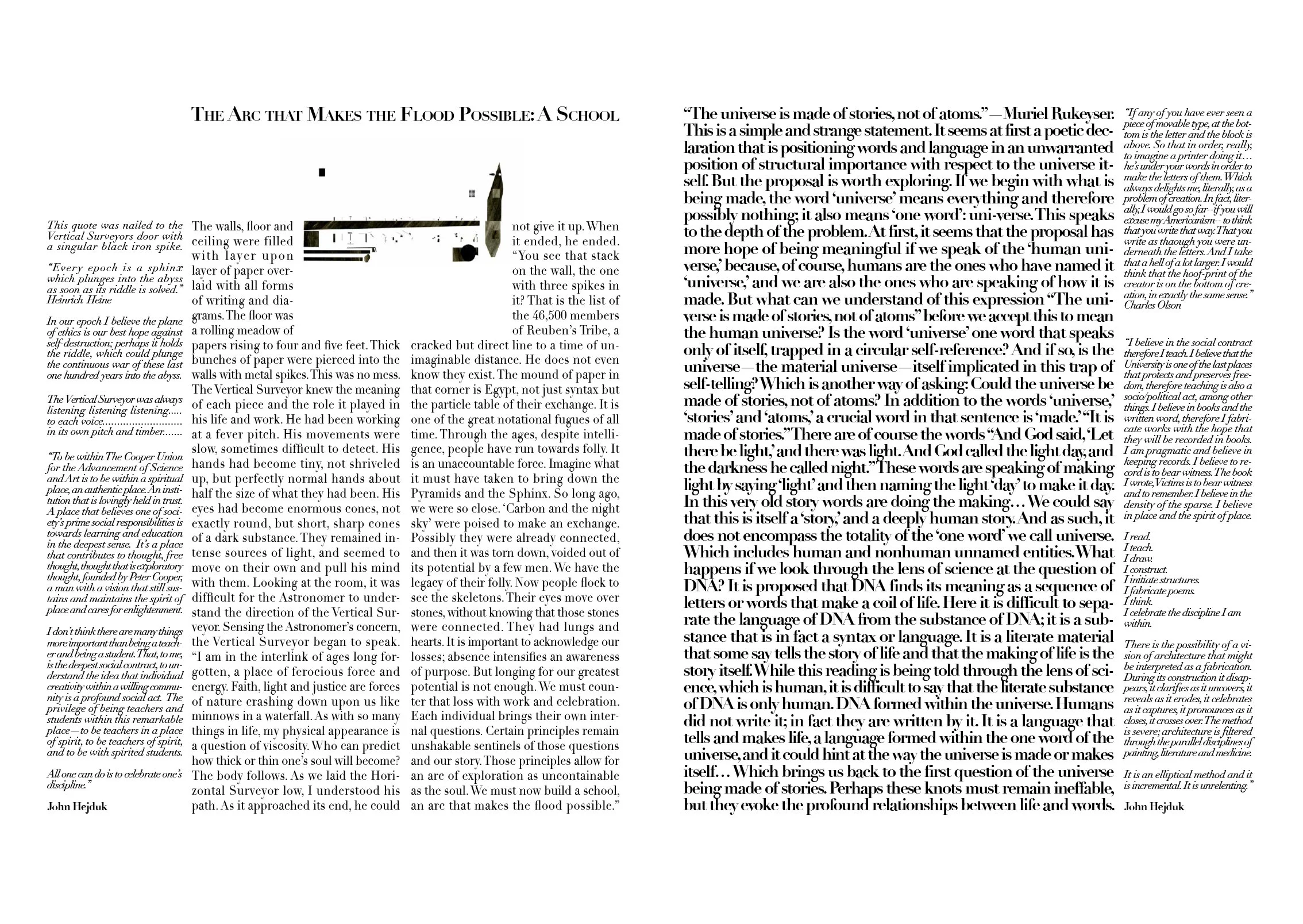
He has curated major exhibitions, including Cooper Union's 165th Anniversary timeline exhibition, A Work in Progress, as well as exhibitions at the CAFA Museum, the RISD Museum, Omi International Arts Center, Wilmer Jennings Gallery, and multiple international biennials. He directed and curated Arts Letters & Numbers' exhibitions for the 17th and 18th Venice Architecture Biennales, including SunShip: The Arc That Makes the Flood Possible and Archives: Infinite Fragile Double.
Gersten is participating in the Xu Bing Space Art Residency Program, an extraterrestrial residency based on the first satellite of China's Star Chain of Arts Project. Launched into low Earth orbit in 2024, the satellite serves as a platform for artistic research and projection, including The 25th Hour, a recent transmission of his project 24 Hours @ Once into space.
Earlier in his career, Gersten founded Tree Time Workshop, a 20,000-square-foot multidisciplinary design and fabrication studio in New York City that produced hundreds of projects for film, television, theater, music, and commercial clients. He is a Fellow of the Royal Society of Arts, a member of the Education Reimagined working group, and serves on the Board of Directors of Big Picture Learning, a network of more than 200 schools worldwide.
/bio

/bio
/bio


/bio