Long Tone: Thesis Studio with David Gersten / Elias Dills
Elias Dills Draws the Forest Out of the Line
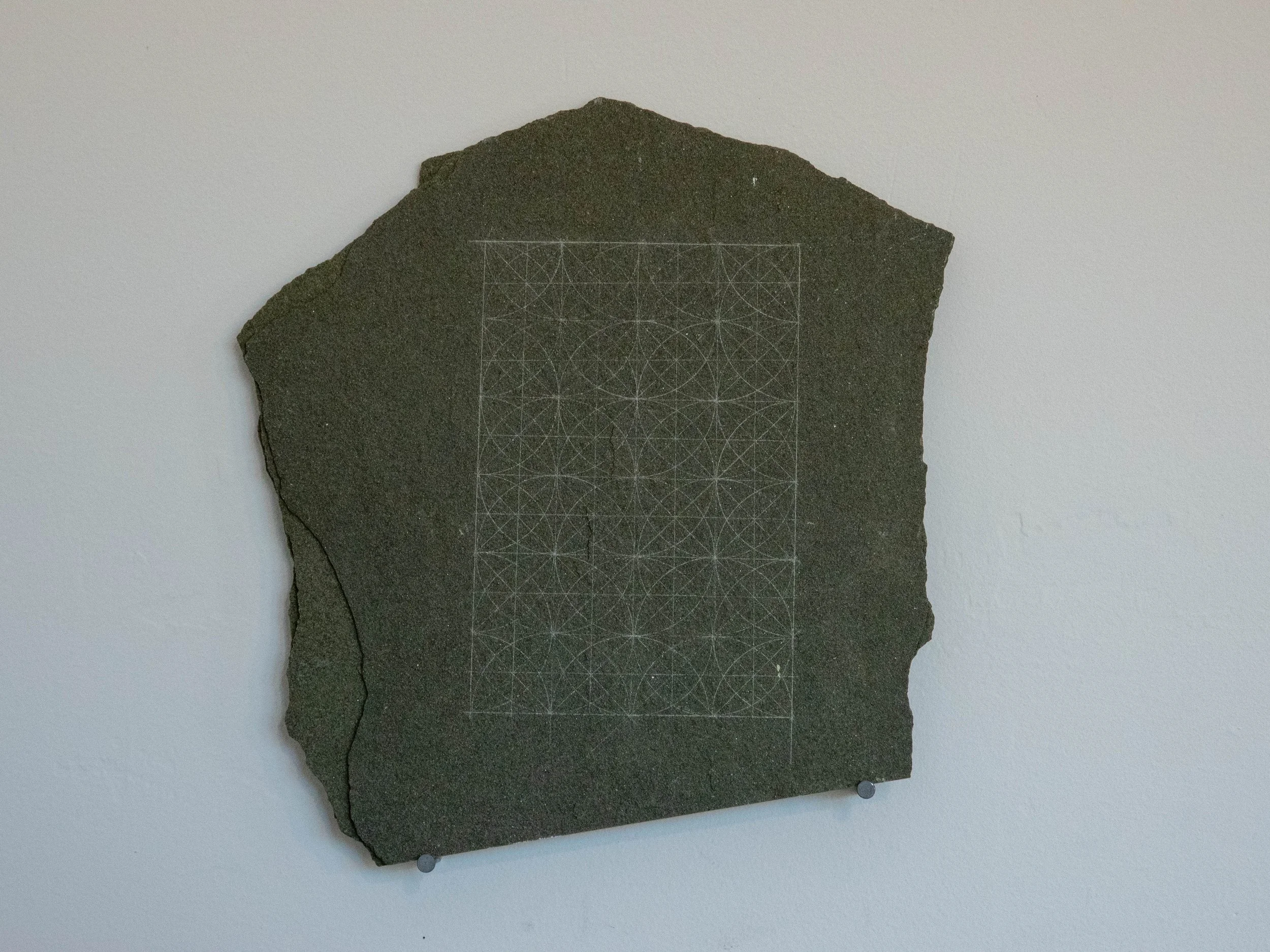
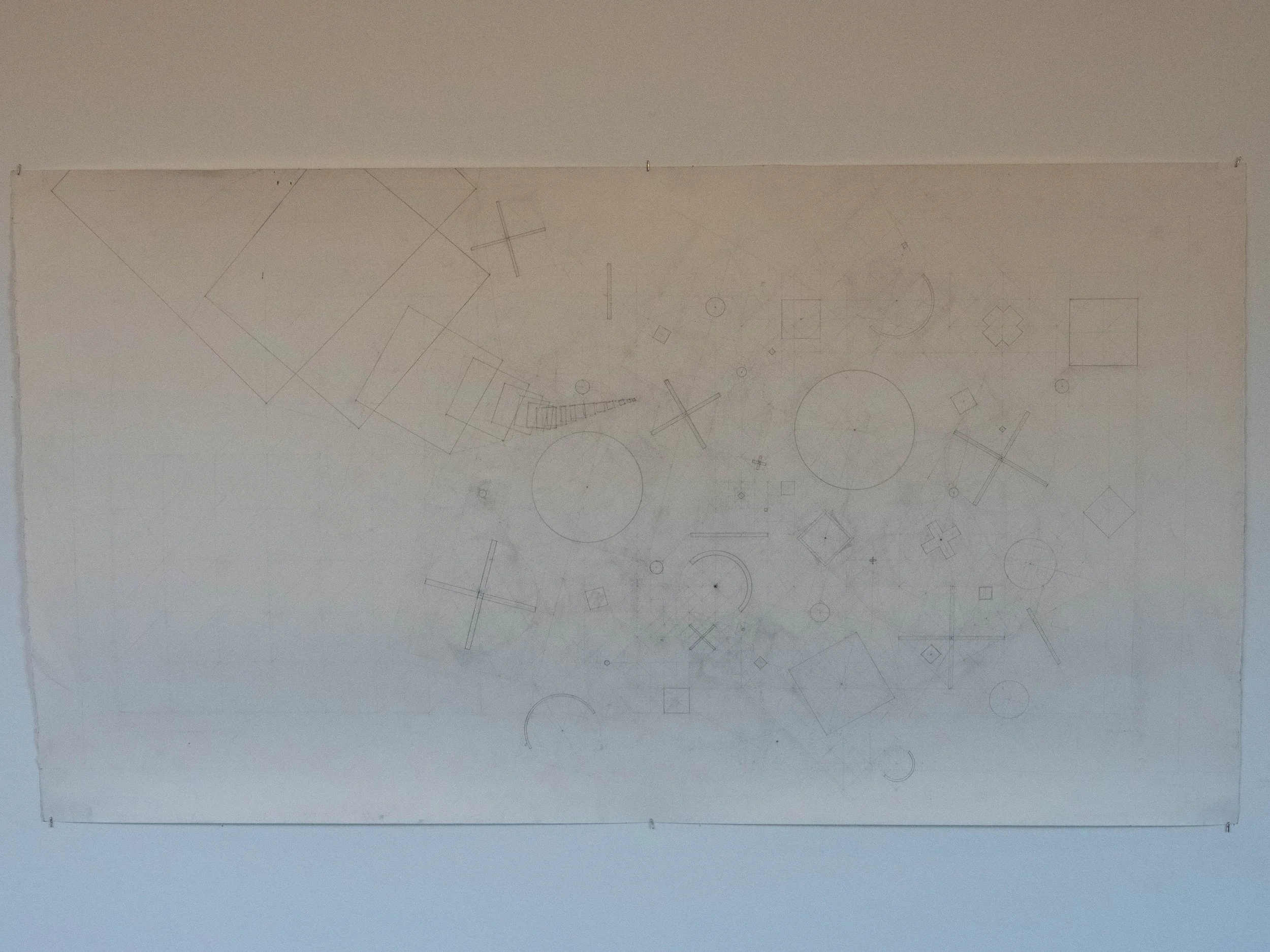
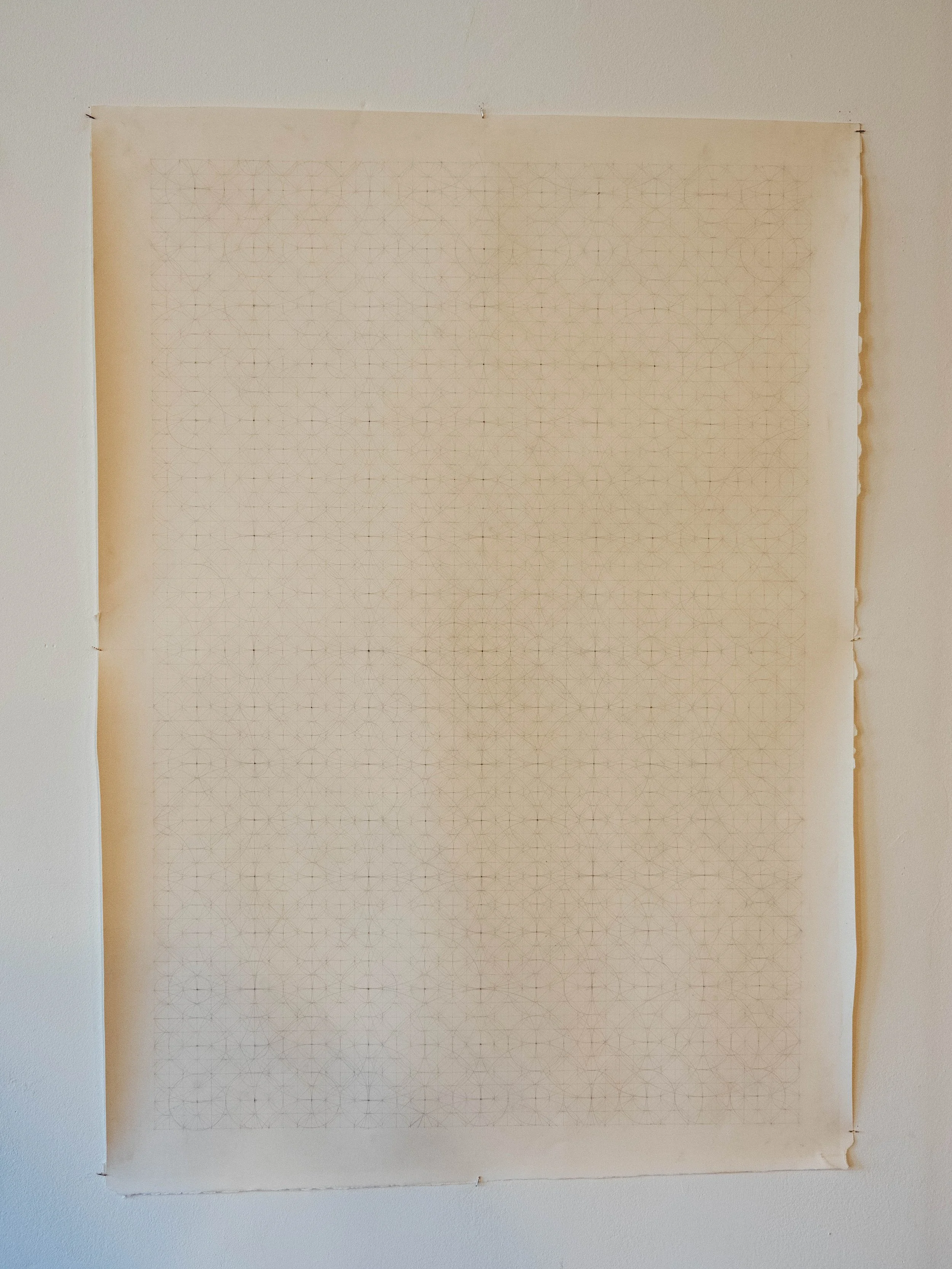
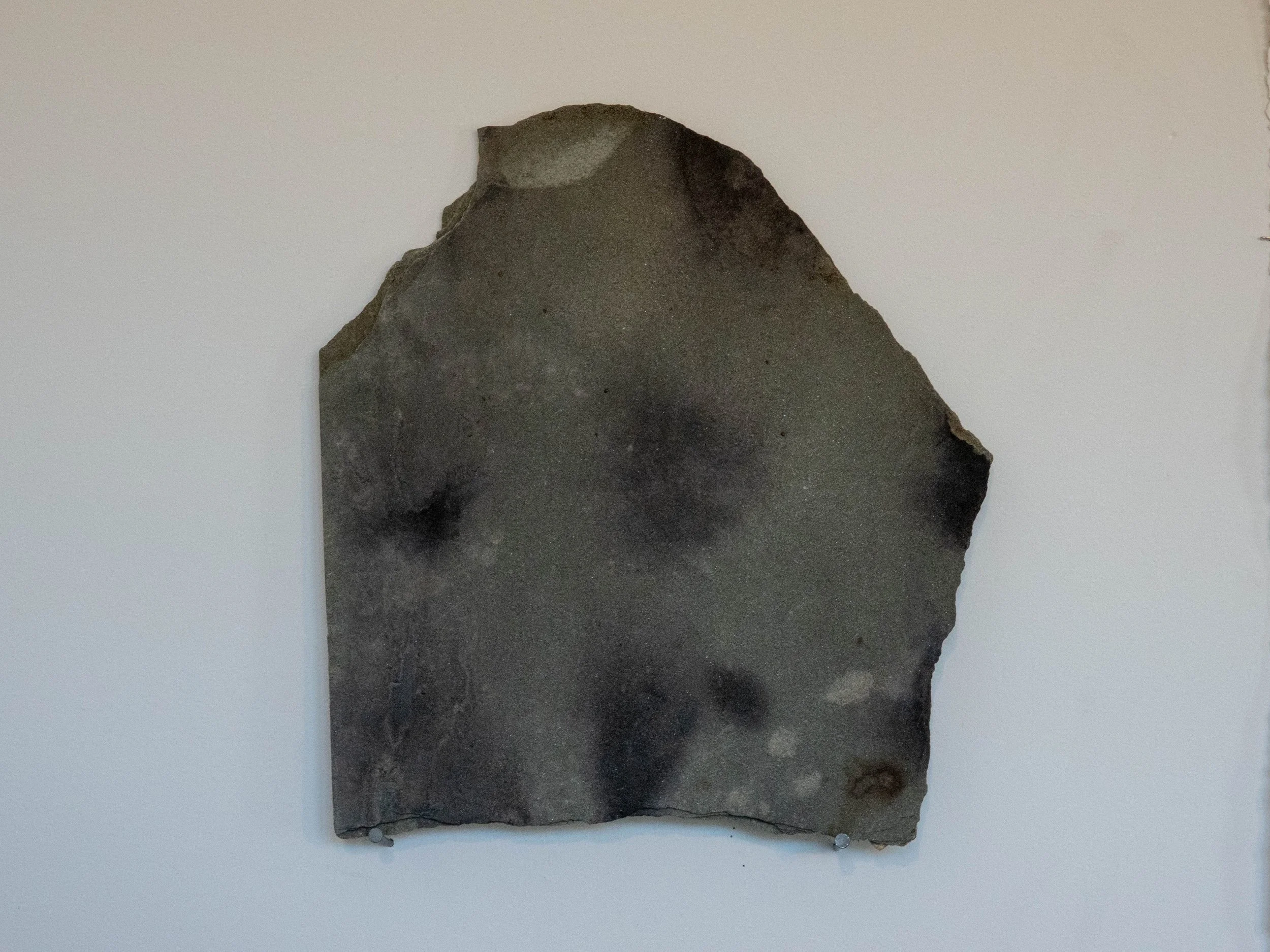
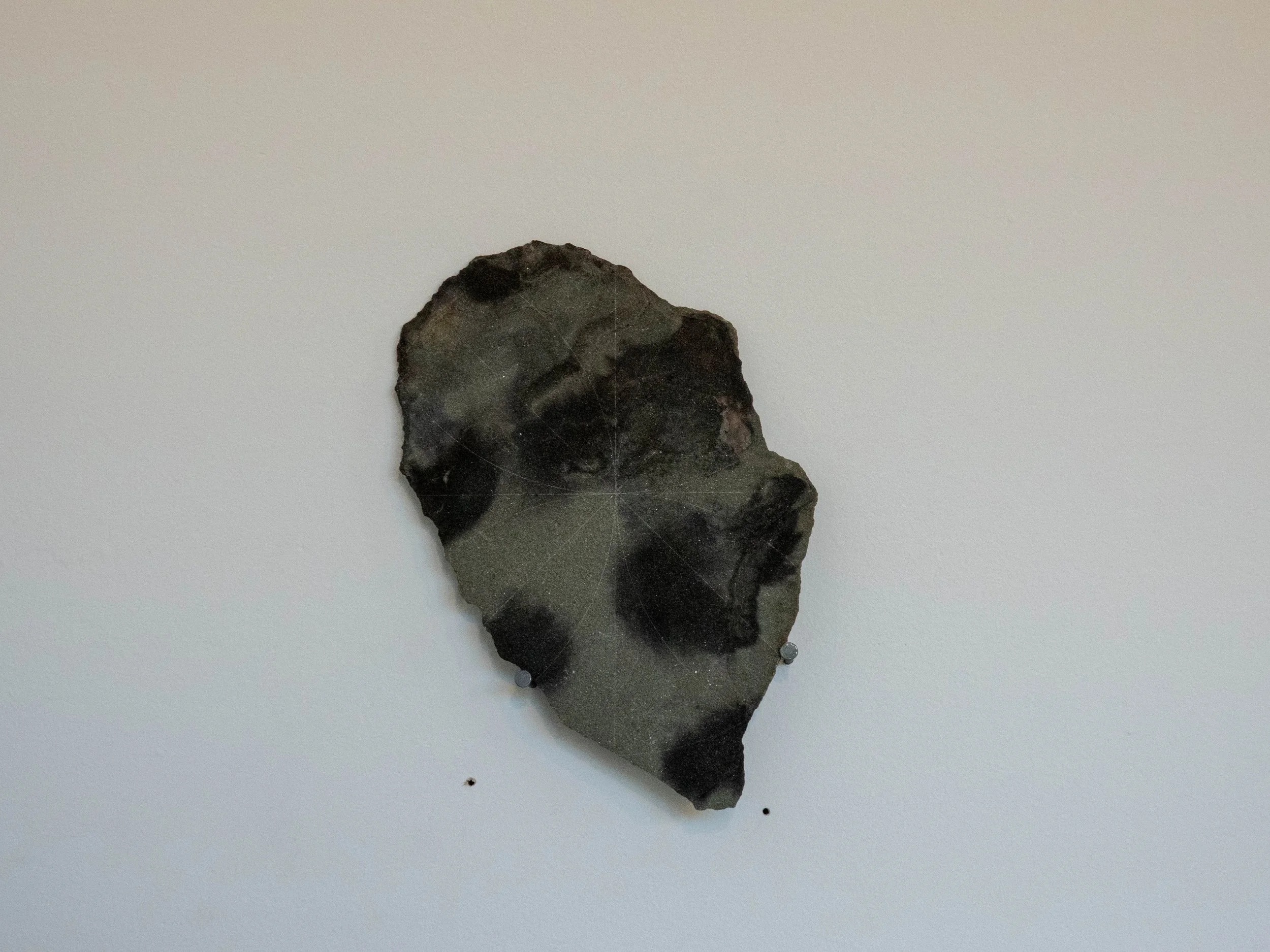
Elias Dills’ work begins in the quiet interior of geometry, a place where lines turn, circles intersect, and forms unfold according to their own internal logics. His earliest drawings in the Long Tone Studio were drafted with a precision that felt less like design and more like inquiry, as if he were listening to the notes of the space rather than composing them. These drawings were not diagrams; they were meditations. They were the record of a mind entering the deep structure of form, tracing the hidden currents that run beneath the visible world.
Henri Bergson once wrote that space and time are “the field that an incomplete reality… needs in order to run in quest of itself,” and that this field “is created as the hunting progresses… deposited beneath it” as it moves. Elias’ geometric drawings embody this idea. They are not pictures of geometry; they are the field geometry creates as it searches for itself. Each line is a step in that pursuit. Each circle is a turning. Each intersection is a moment where the inquiry deposits a new layer of space beneath the hand.
As this inquiry deepened, something else became visible, the quality of attention Elias brings to his work. He draws with a rare combination of precision and vulnerability. His lines do not simply record what he sees; they reveal how he thinks, how he listens, how he allows a form to unfold in its own time. There is a gentleness in his inquiry, a patience that lets the world speak before he answers. Whether he is tracing the turning of a circle or the branching of a root system, his work carries the unmistakable signature of someone who approaches drawing as a way of being in relation to geometry, to memory, to landscape, to the living systems that shaped him. His originality lies not in invention for its own sake, but in the clarity with which he lets the world lean toward him, and the grace with which he leans back.
From this interior field, Elias turned outward and further inward, toward the landscape of his youth. He returned through photography to a wild terrain of shifting sands, tangled roots, and understory, a place where the jungle is both above and below your feet. This was not nostalgia but recognition: a return to the geography that shaped him long before he had the language to describe its influence.
Charles Olson begins one of his Maximus poems with the line, “I come back to the geography of it…”. Elias’ return echoes this gesture. Geography is not backdrop; it is pressure. It leans toward us. It shapes the body’s sense of direction, the mind’s sense of scale, the heart’s sense of belonging. And in turning back to it, Elias was not simply documenting a place he was letting the place press back into him.
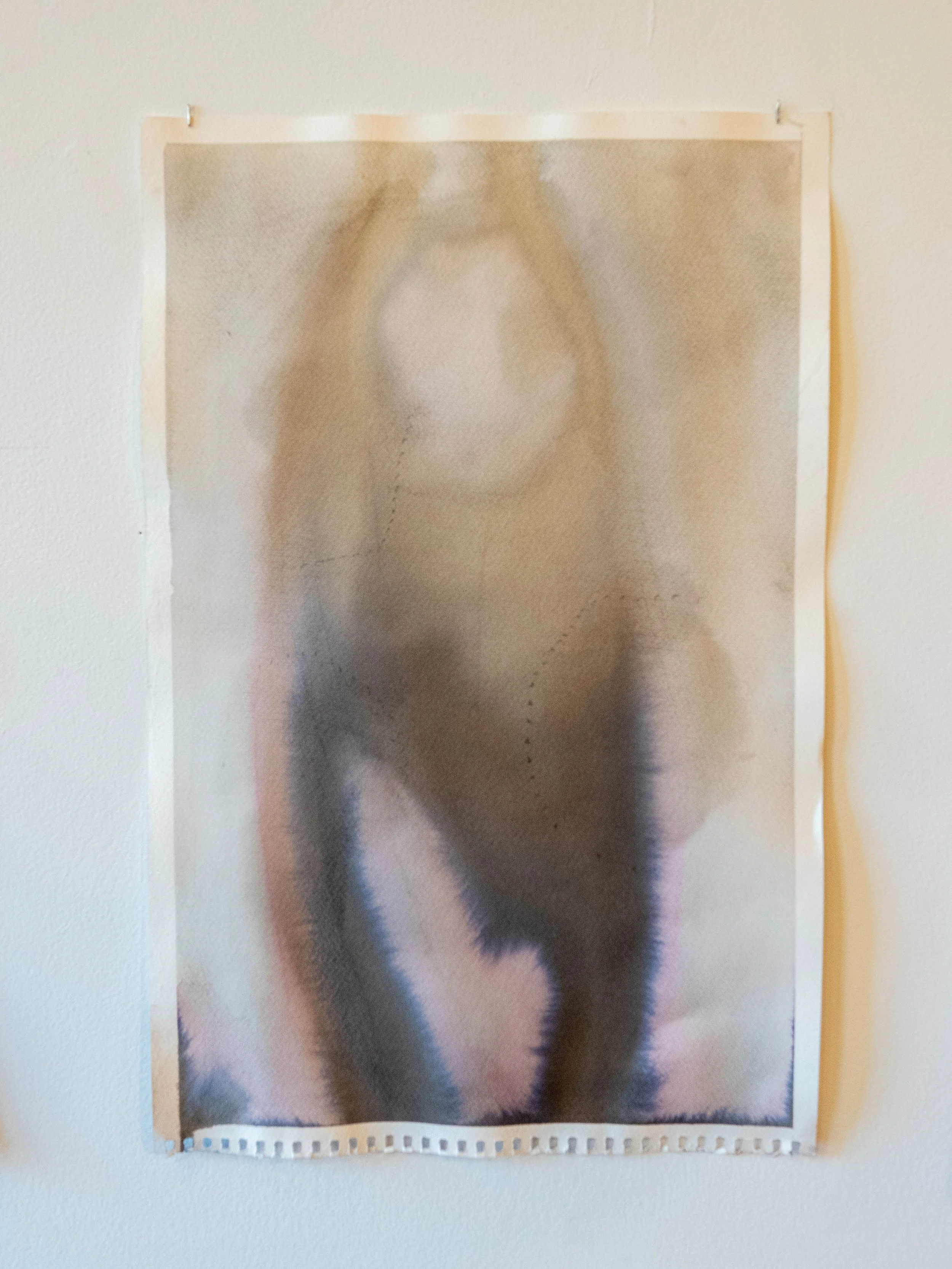
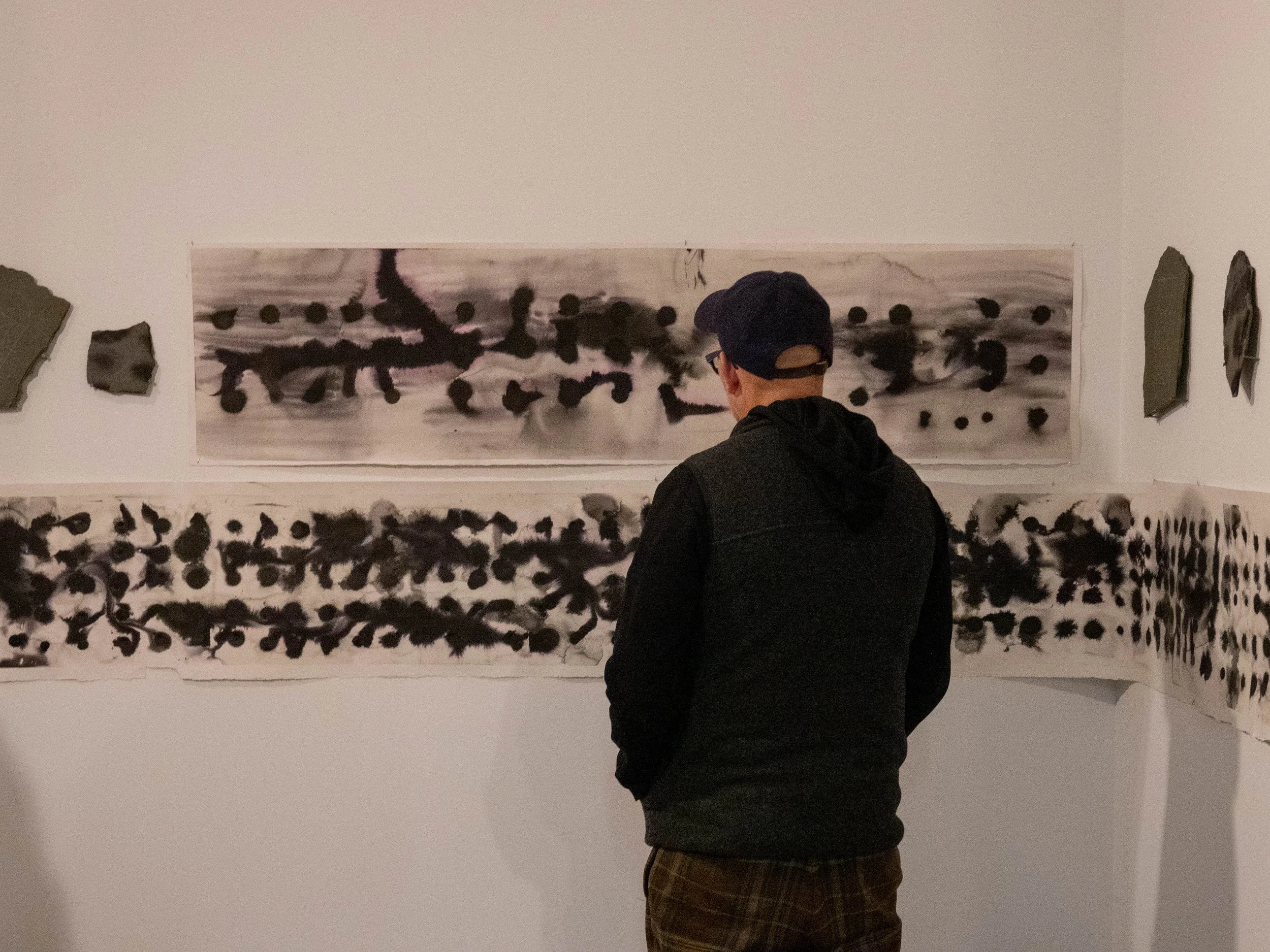
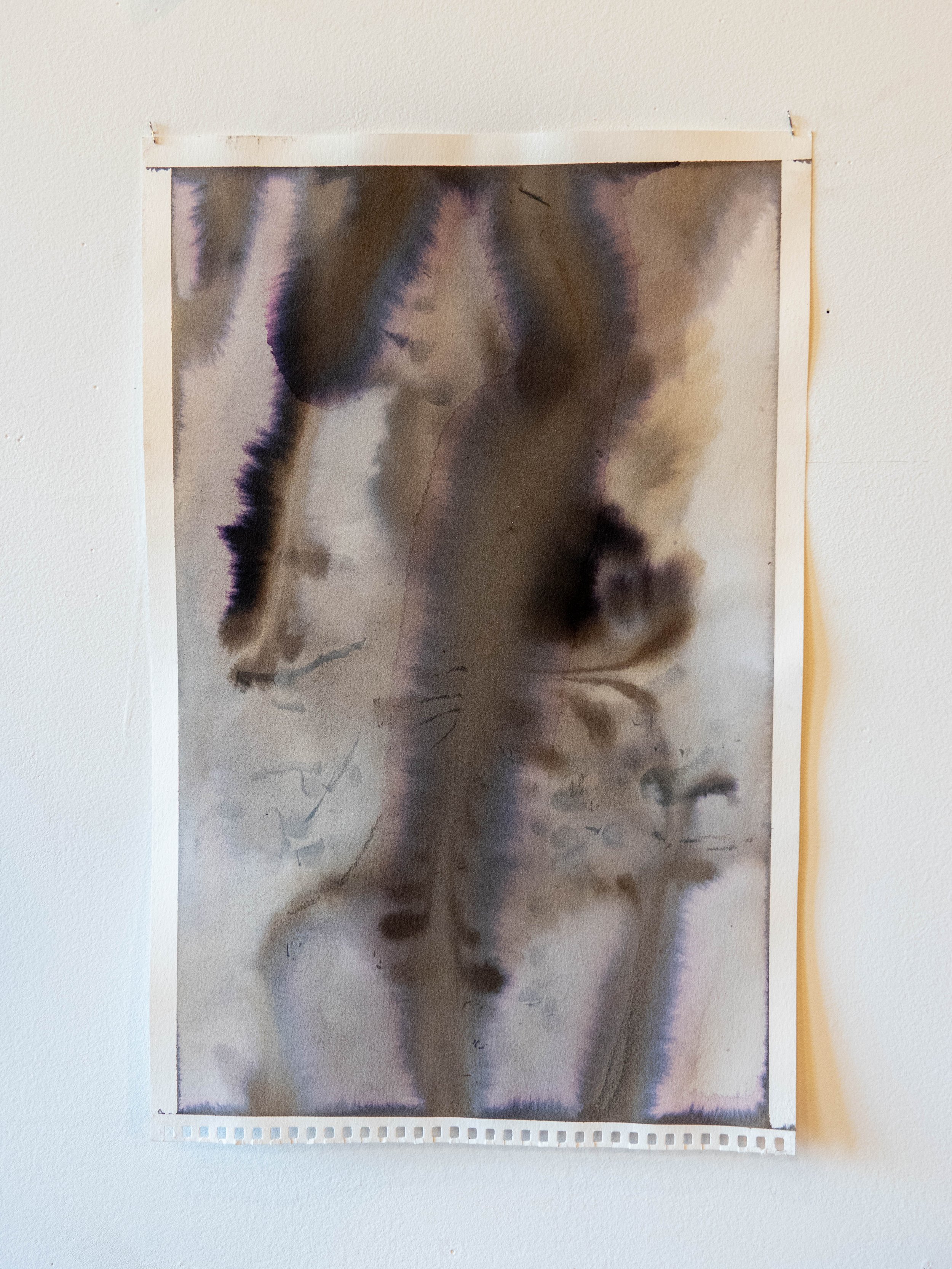
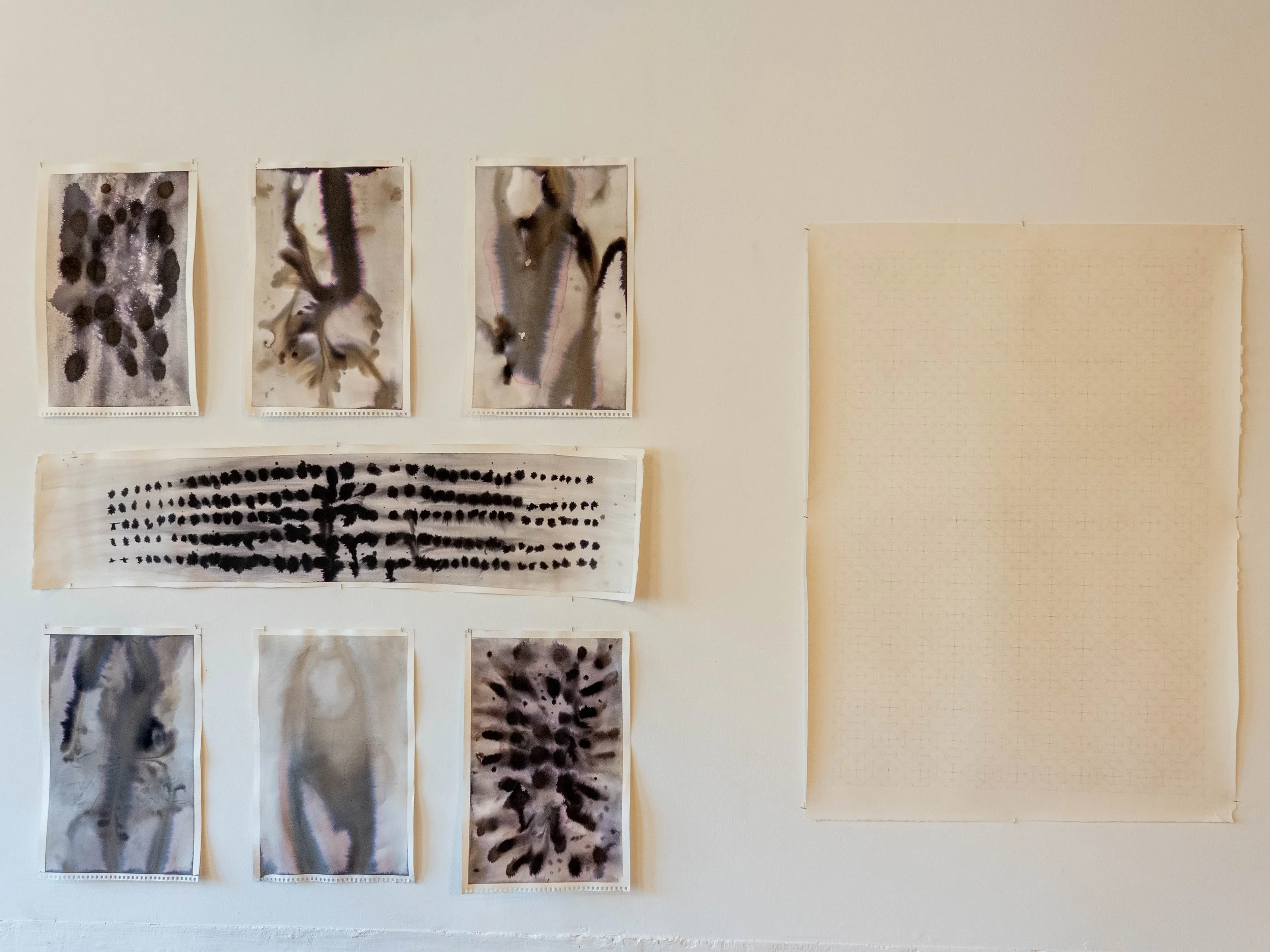
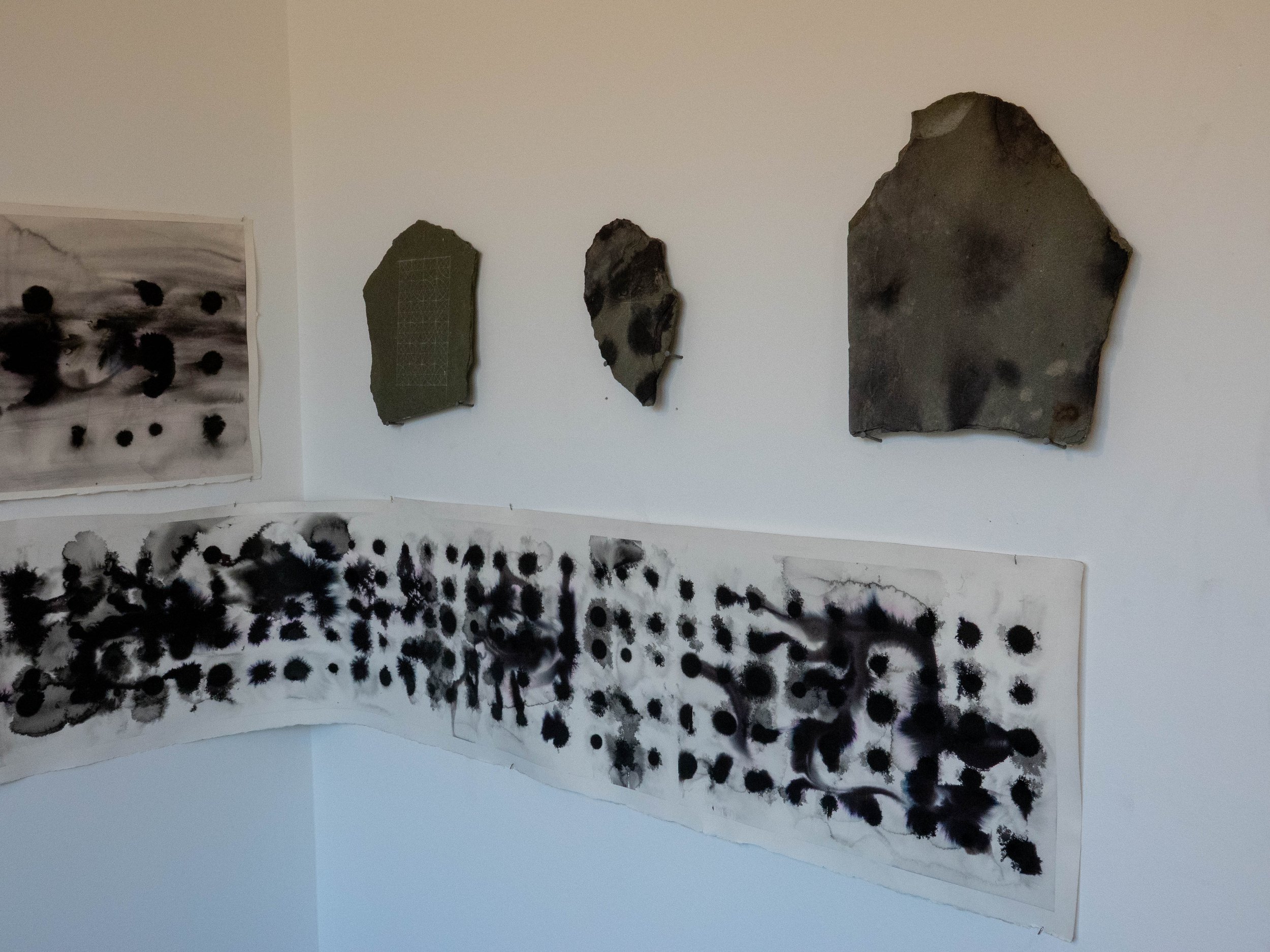
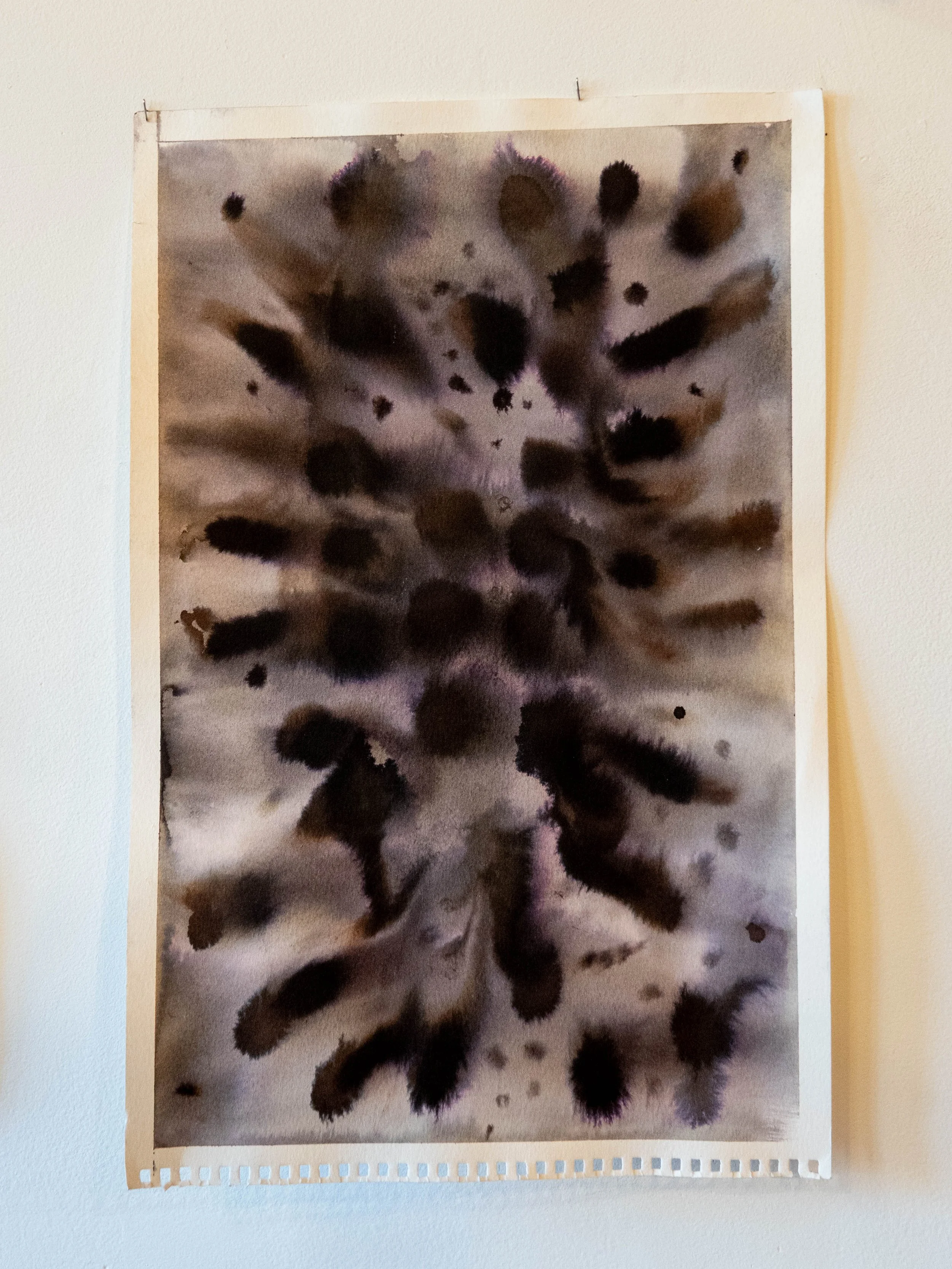
From this return, a new form of drawing emerged. Elias began working with ink, water, and gravity, allowing drops of liquid to spread across the paper like roots searching for soil, like water finding its path, like the understory growing in slow, deliberate expansions. These drawings were not made by controlling the ink but by collaborating with it. The liquid moved according to its own laws, and Elias guided, nudged, and listened.
The result was a series of drawings that were both of the forest and a forest. They depict the geography of his youth, but they also enact the processes that shape that geography branching, pooling, dispersing, gathering. The ink spreads like roots. The paper absorbs like soil. The drawing grows. These works feel as if they were not drawn but grown, as if the forest itself were leaning into the page.
Olson’s sense of geography leaning in on us, and us compelling it backward, becomes visible here. The landscape presses toward Elias, and he presses back through ink. The forest enters the drawing, and the drawing enters the forest. The page becomes a field created as the inquiry progresses, a place where memory behaves like a living system.
What emerges is a body of work that moves from the internal logic of geometry to the external logic of landscape, and then to the deeper logic that binds them: the logic of systems that grow, unfold, and reveal themselves through movement. Elias’ drawings are not static images; they are fields of becoming. They show that geometry is not separate from the forest, that the forest is not separate from the mind, that the mind is not separate from the hand, that the hand is not separate from the ink.
In Elias’ work, drawing becomes a way of returning to form, to memory, to place, to the living systems that shape us. It becomes a way of letting the world lean in, and of leaning back with clarity, attention, and grace.
David Gersten | December 2025
Founding Director
Arts Letters and Numbers
/media