Long Tone: Thesis Studio with David Gersten / Meztli Castro Asmussen
Angels of Gravity
Meztli Castro Asmussen’s Levitation
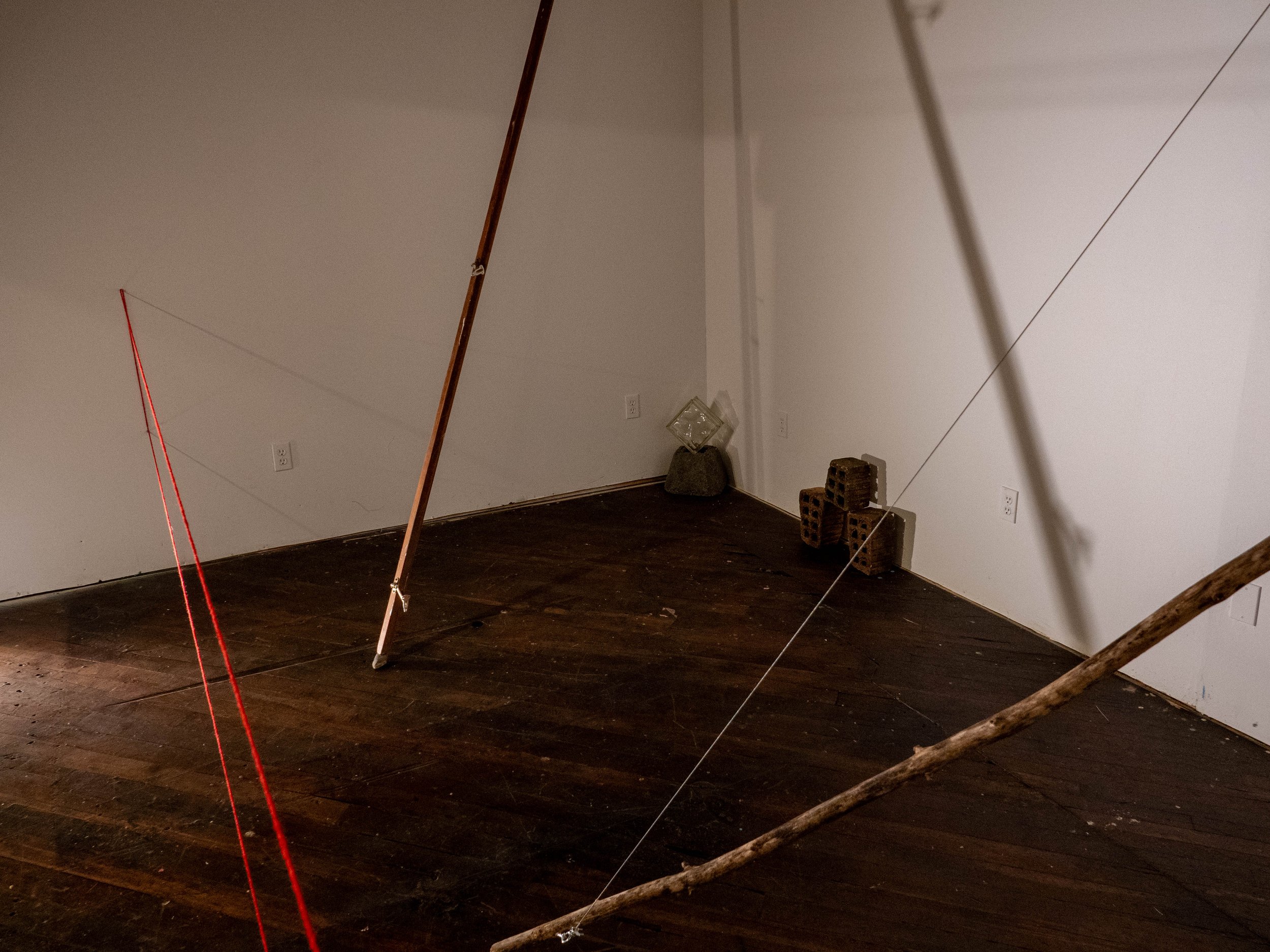
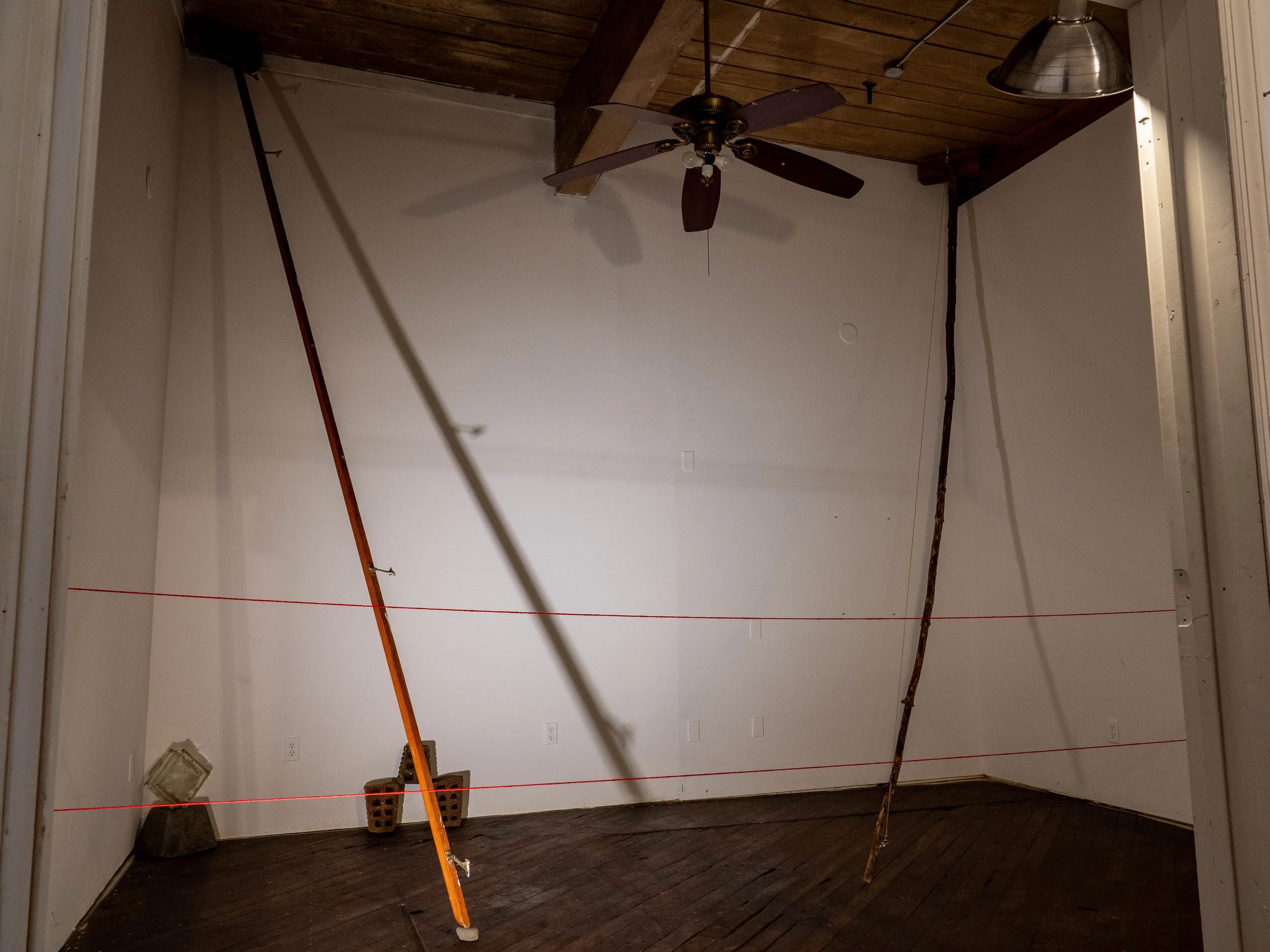
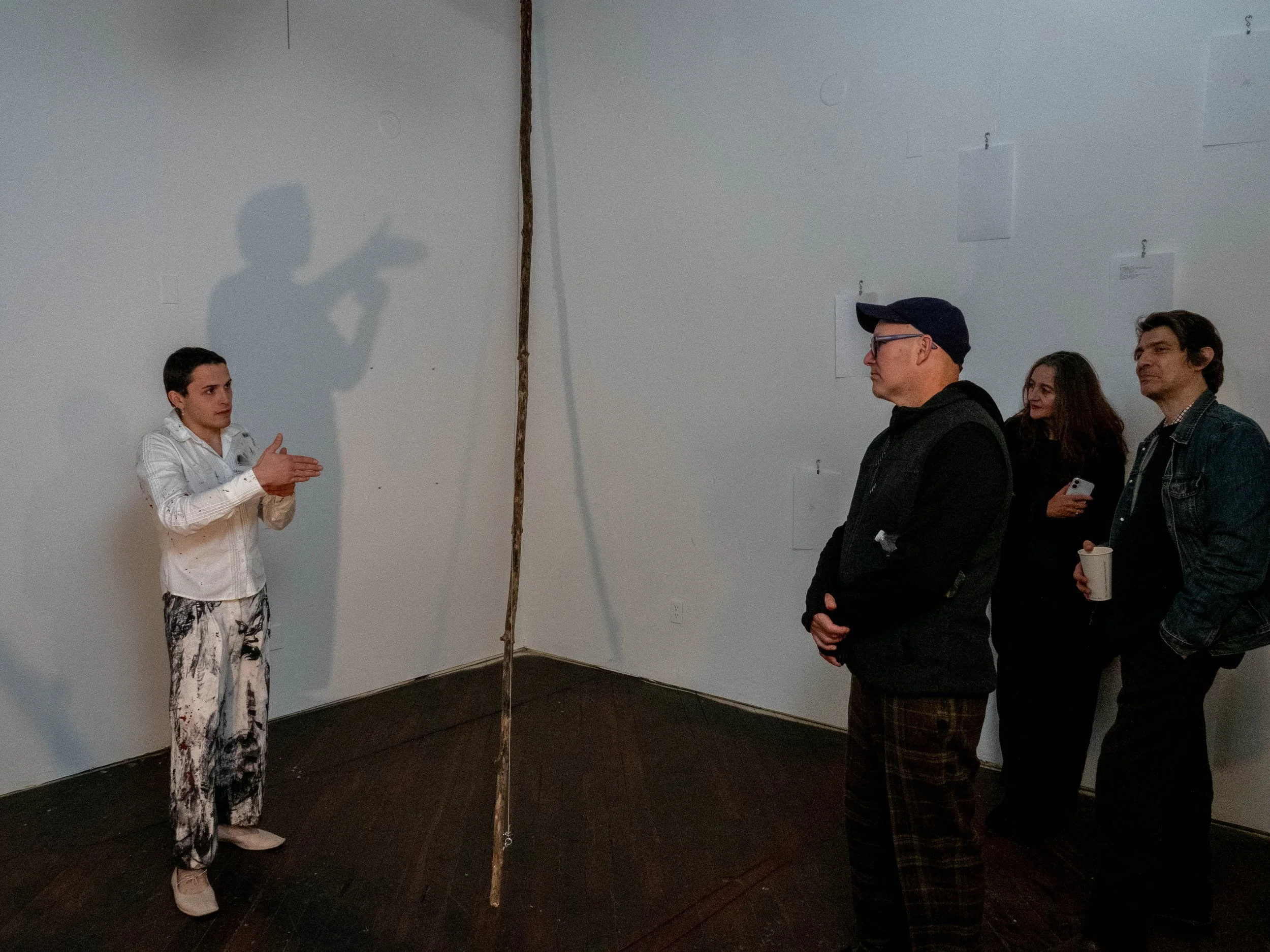
Meztli Castro Asmussen’s recent work constructs an embodied paradox: the heaviest of materials cut wooden timbers, beams with histories in their grain, are made to hover, to levitate, to resist the timeless pull of gravity. Entering the room, one feels a charged stillness, a tension that is not anxious but attentive, as if the space itself were holding its breath. The beams are not lifted by force but by delicate negotiations: friction, balance, the barely visible pull of cables. The installation becomes a choreography of weight and suspension, a constellation of angels whose wings are not feathers but timber, whose flight is not ascension but equilibrium.
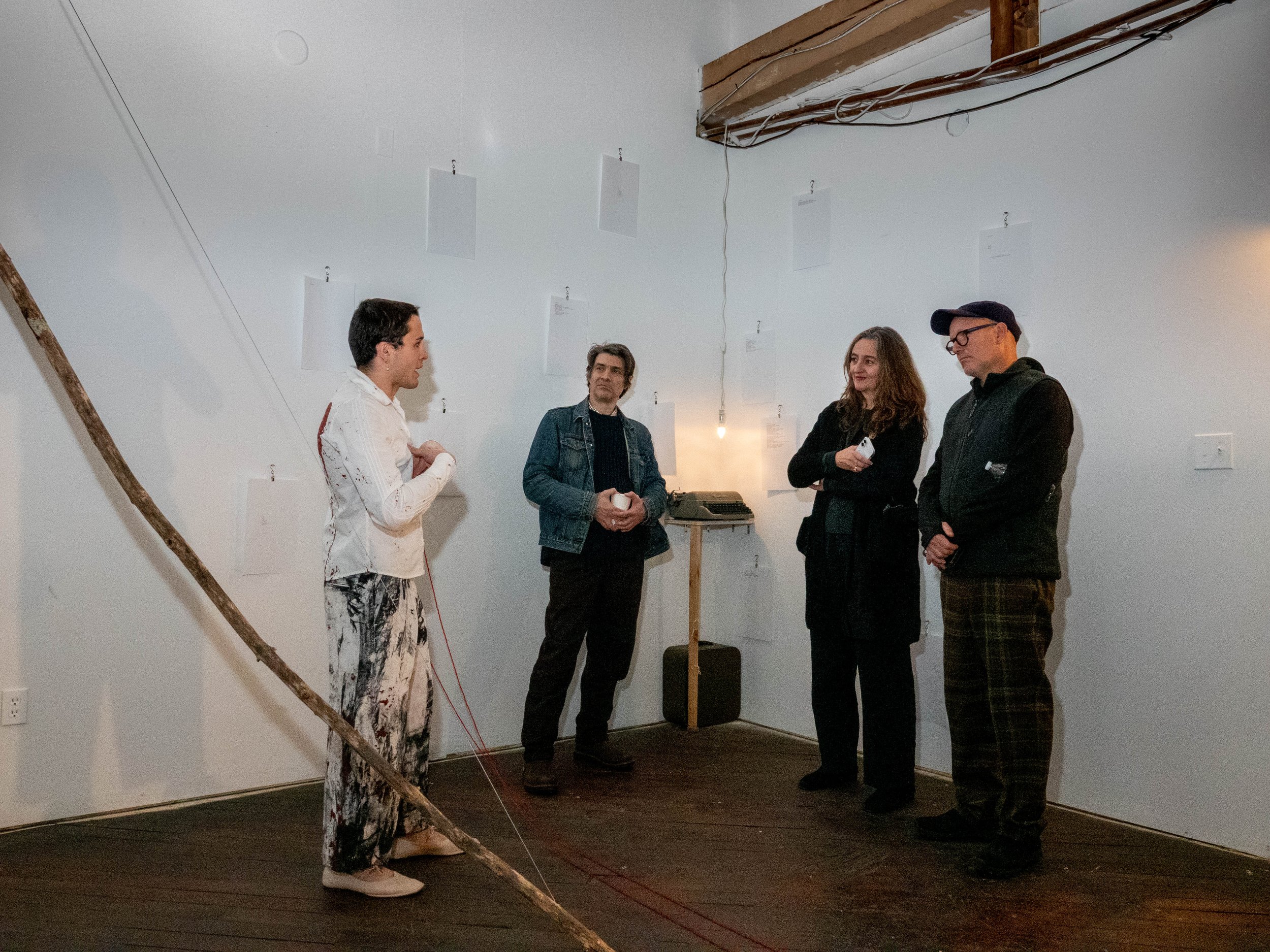
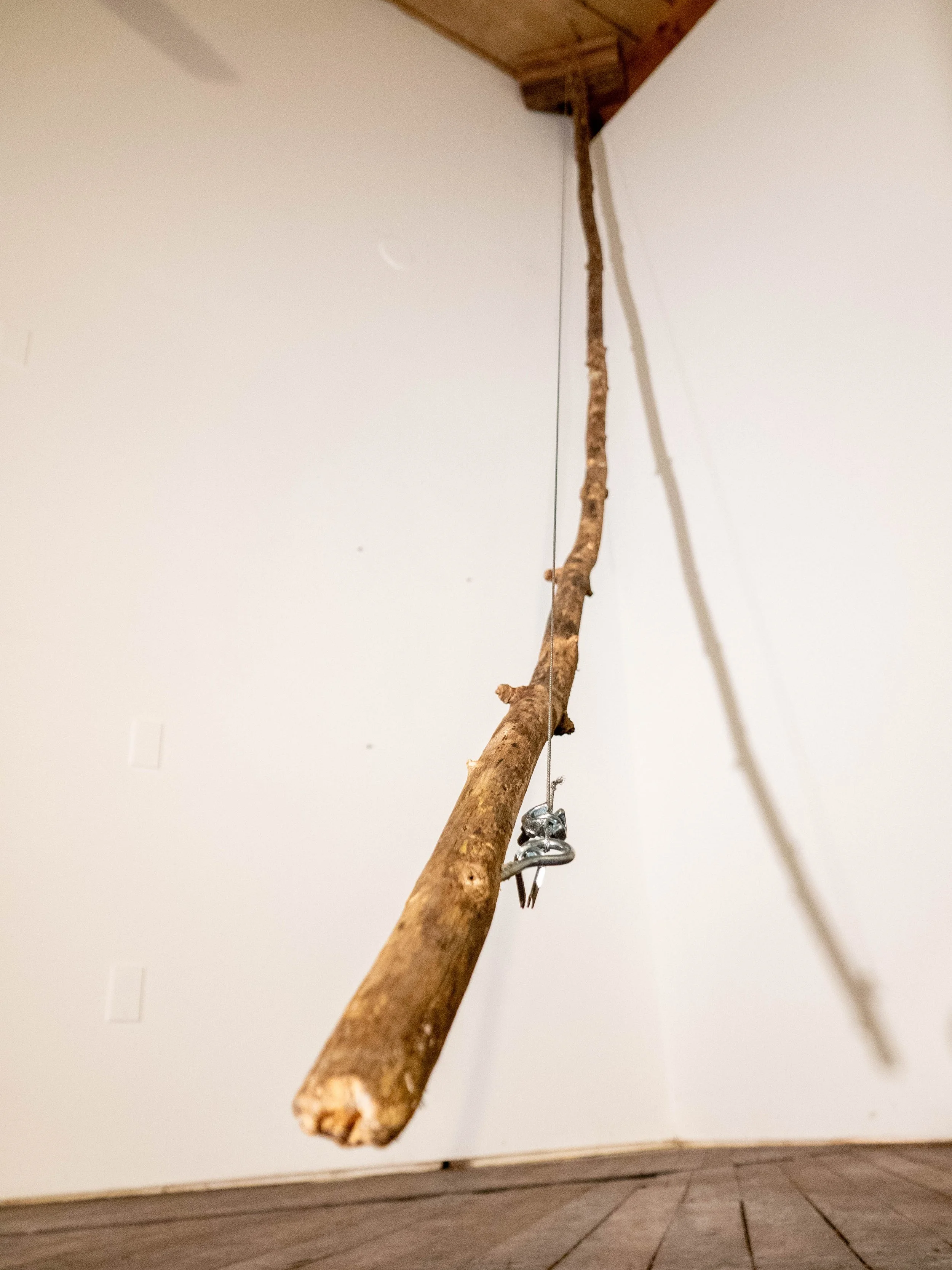
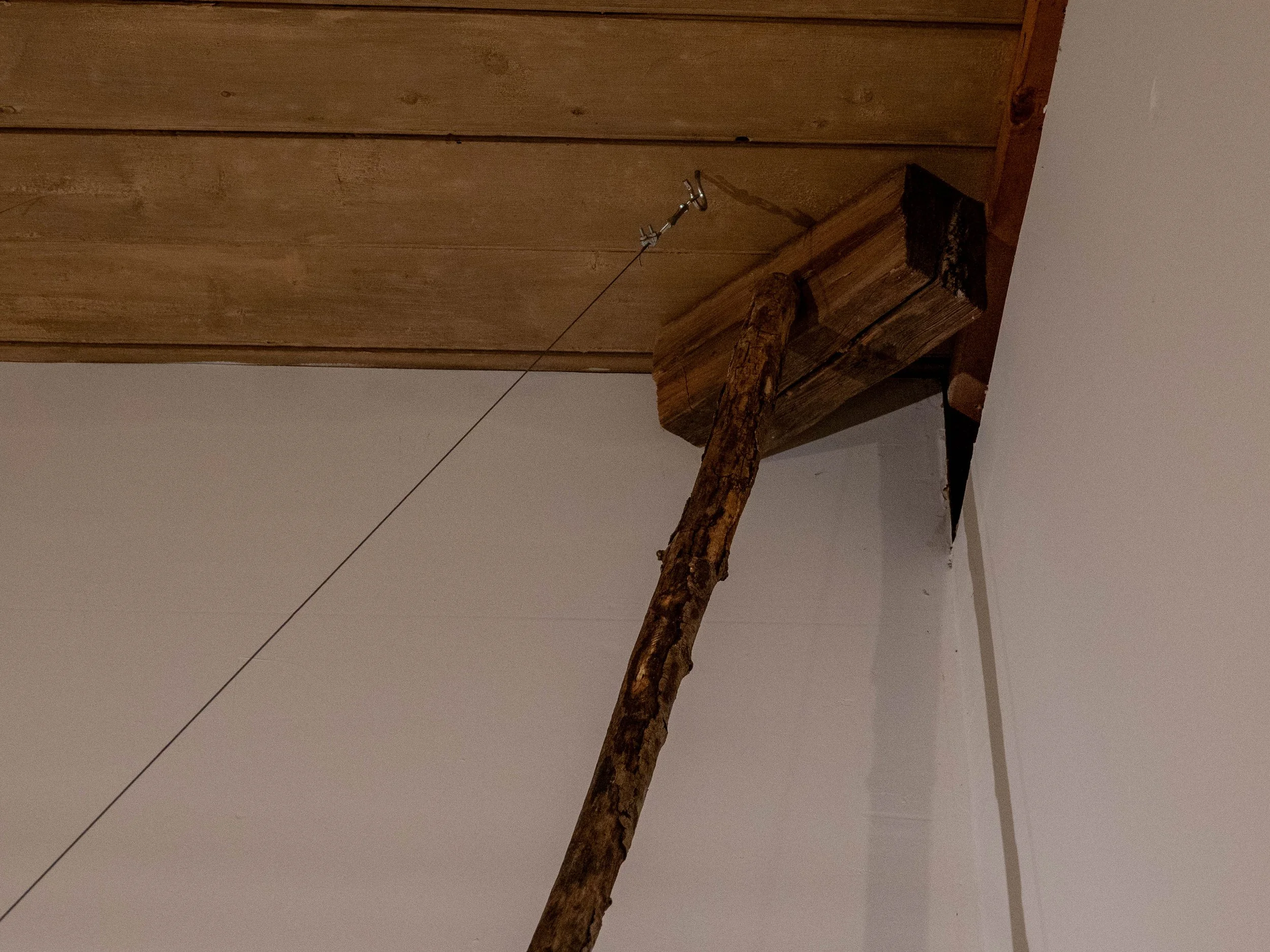
One piece employs a handrail salvaged from a house, pressed against the ceiling by the smallest of stones. The friction alone holds the beam in place, as if the stone were a talisman, a minor angel stabilizing the cosmos. Another piece is even more uncanny: a long branch, hovering above the floor, tethered to the ceiling by a cable. The cable bows the branch upward, like a drawn bowstring. This slight uplift is enough to press another heavy beam against the ceiling. The branch never touches the ground, yet it bears the weight of the world.
What makes these works so arresting is that they activate a sense we rarely name but constantly rely on: the sense of balance. The very word once referred to a bi-lanx — literally “two pans” — a pair of suspended plates held in tension, a device for weighing one thing against another, a reminder that balance has always been understood as a relationship. Like sight or hearing, it is a perceptual instrument, a deep evolutionary inheritance that calibrates our orientation in space. Meztli’s installations awaken this sense with unusual clarity. Standing beneath the hovering beams, one feels the vestibular system listening, adjusting, attuning. The body becomes a seismograph of equilibrium. The works do not merely depict balance; they require it, they speak it, they teach it.
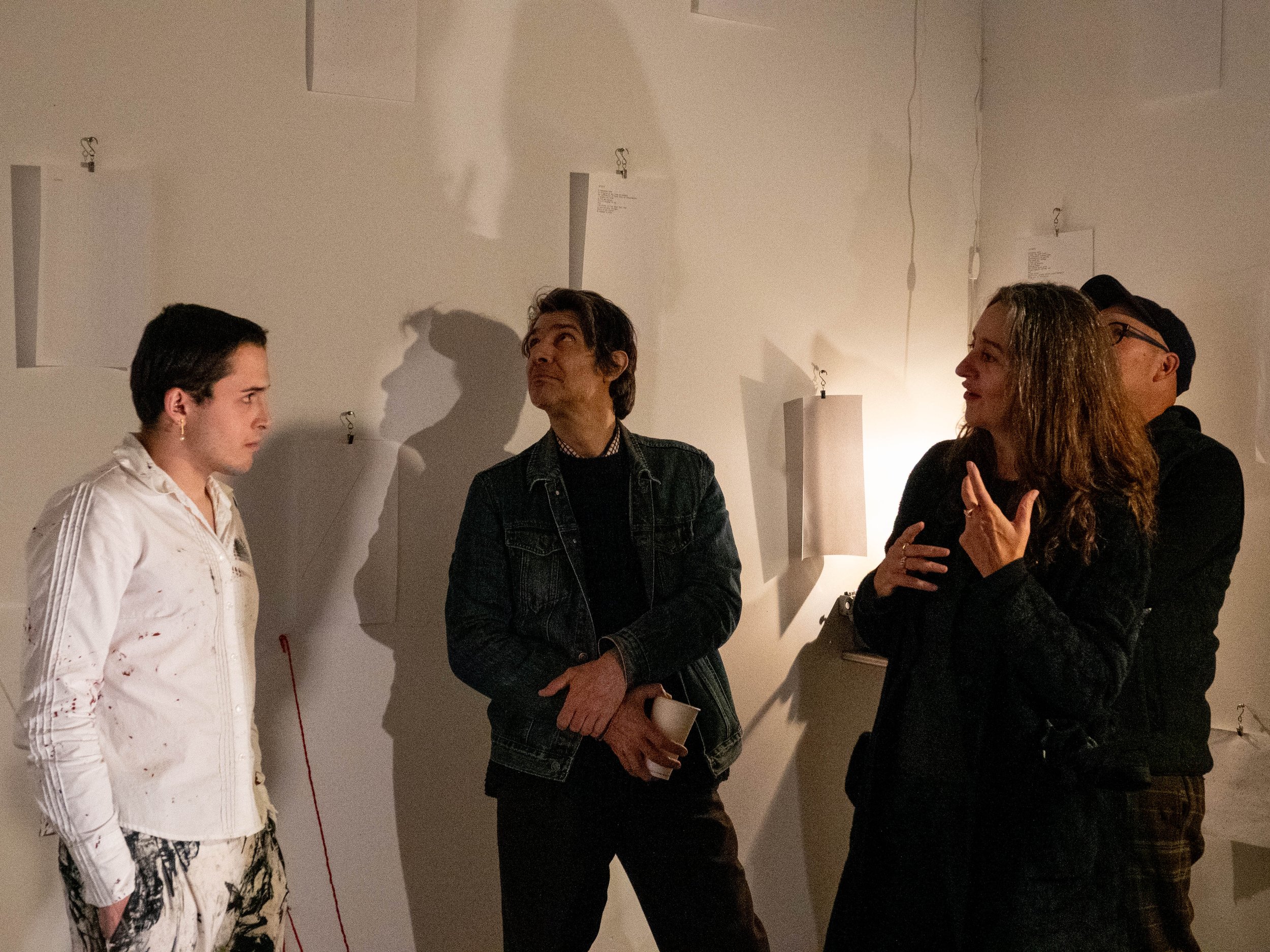
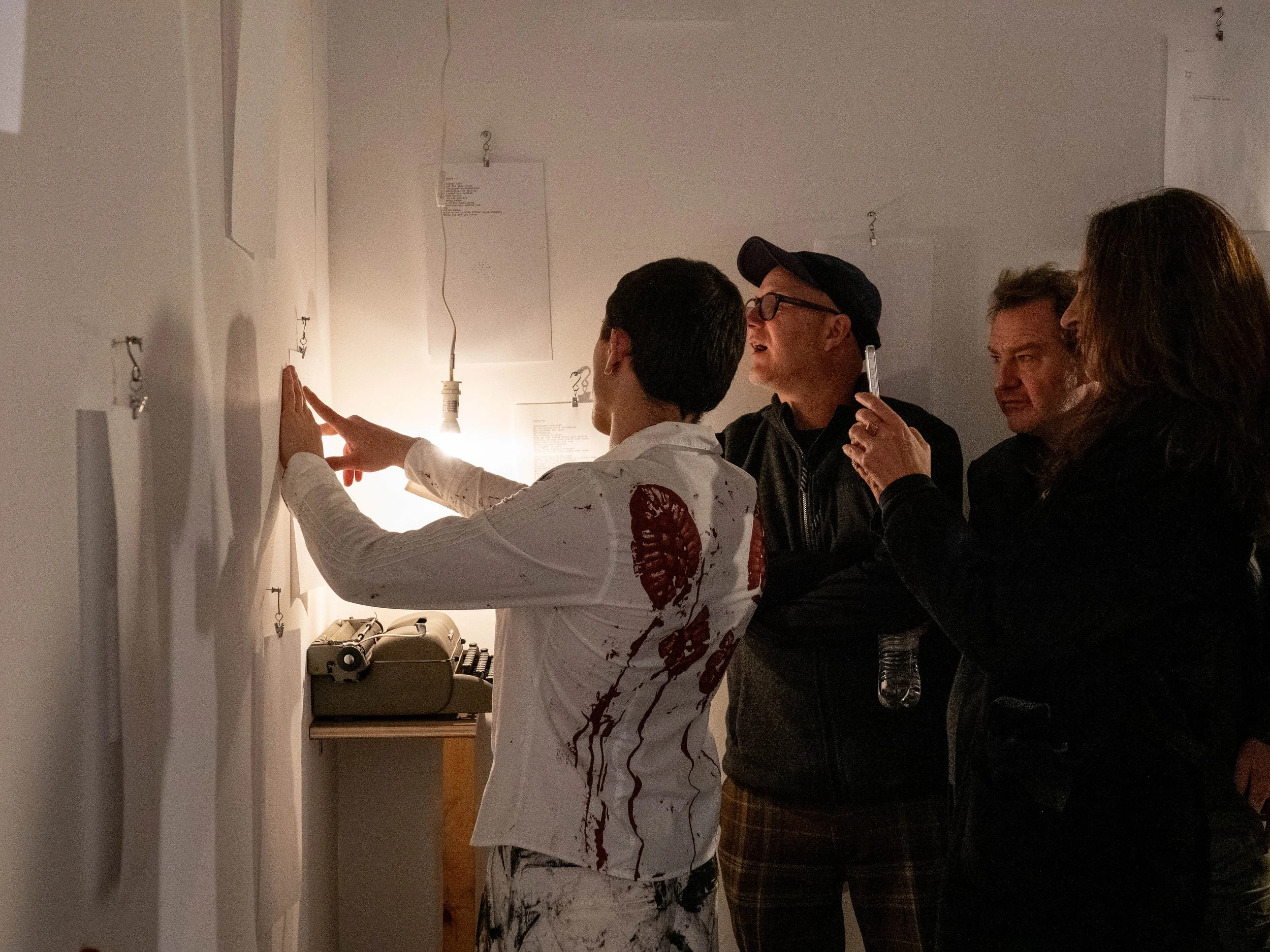
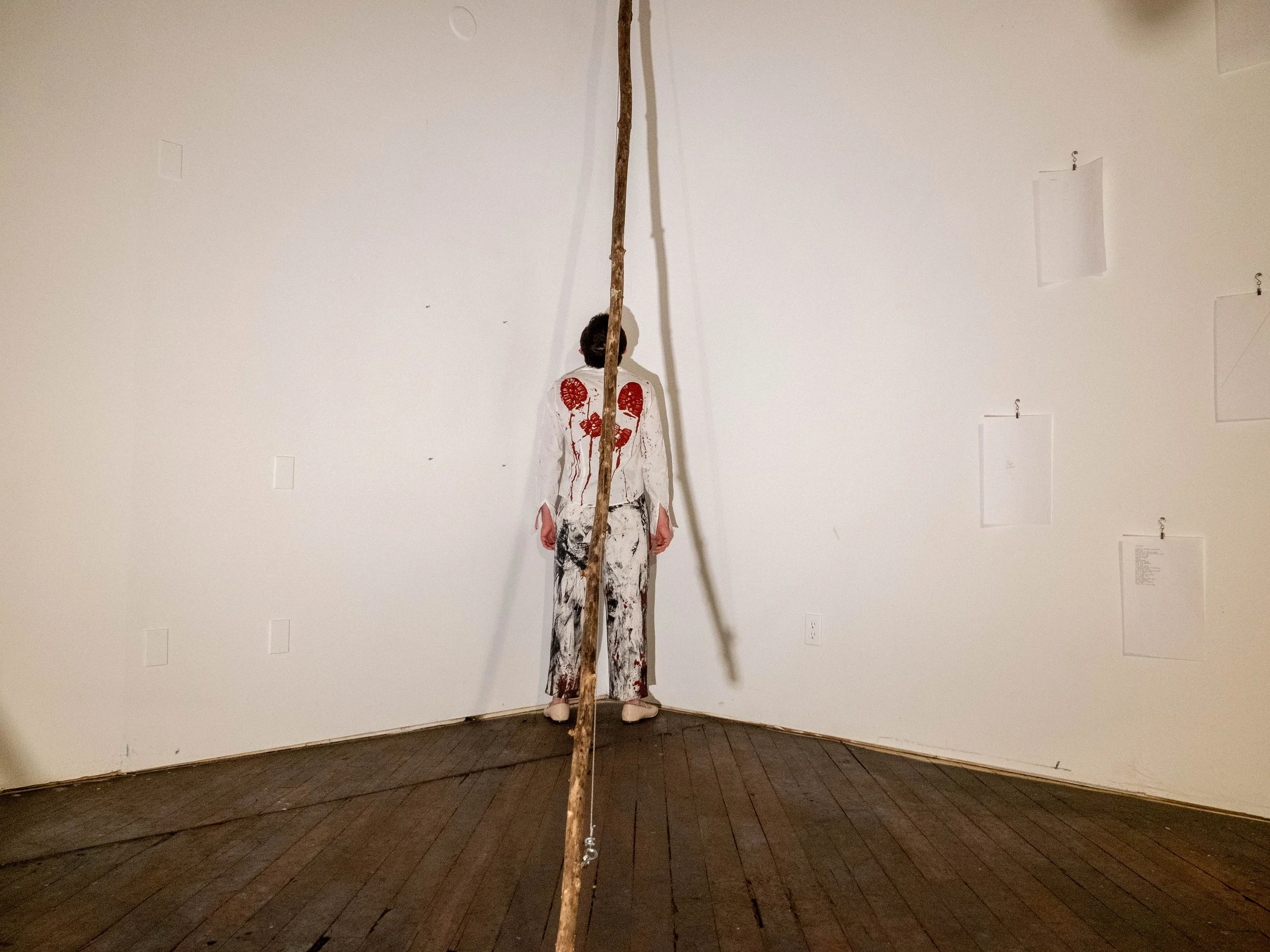
Within this fragile equilibrium, Meztli performed beneath the suspended wood, dressed in an angel suit created for him by Sovereign Strickland. The collaboration itself became an act of levitation. The artist’s body entered the constellation, a living angel standing under the hovering beam, embodying the precarious reciprocity between gravity and grace. The angel suit was not costume but ritual garment, a reminder that angels are figures of mediation: between heaven and earth, between weight and flight, between silence and song.
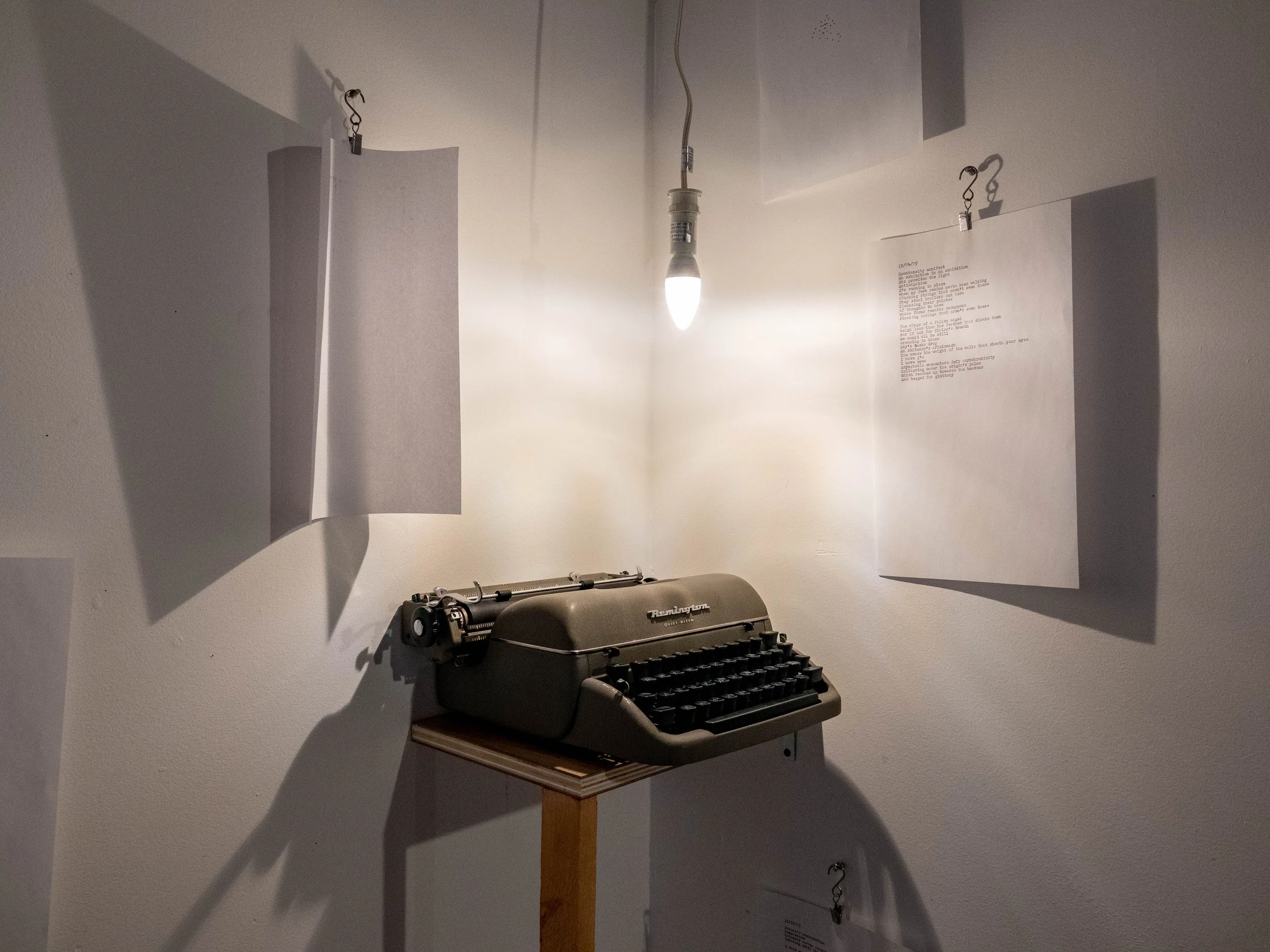
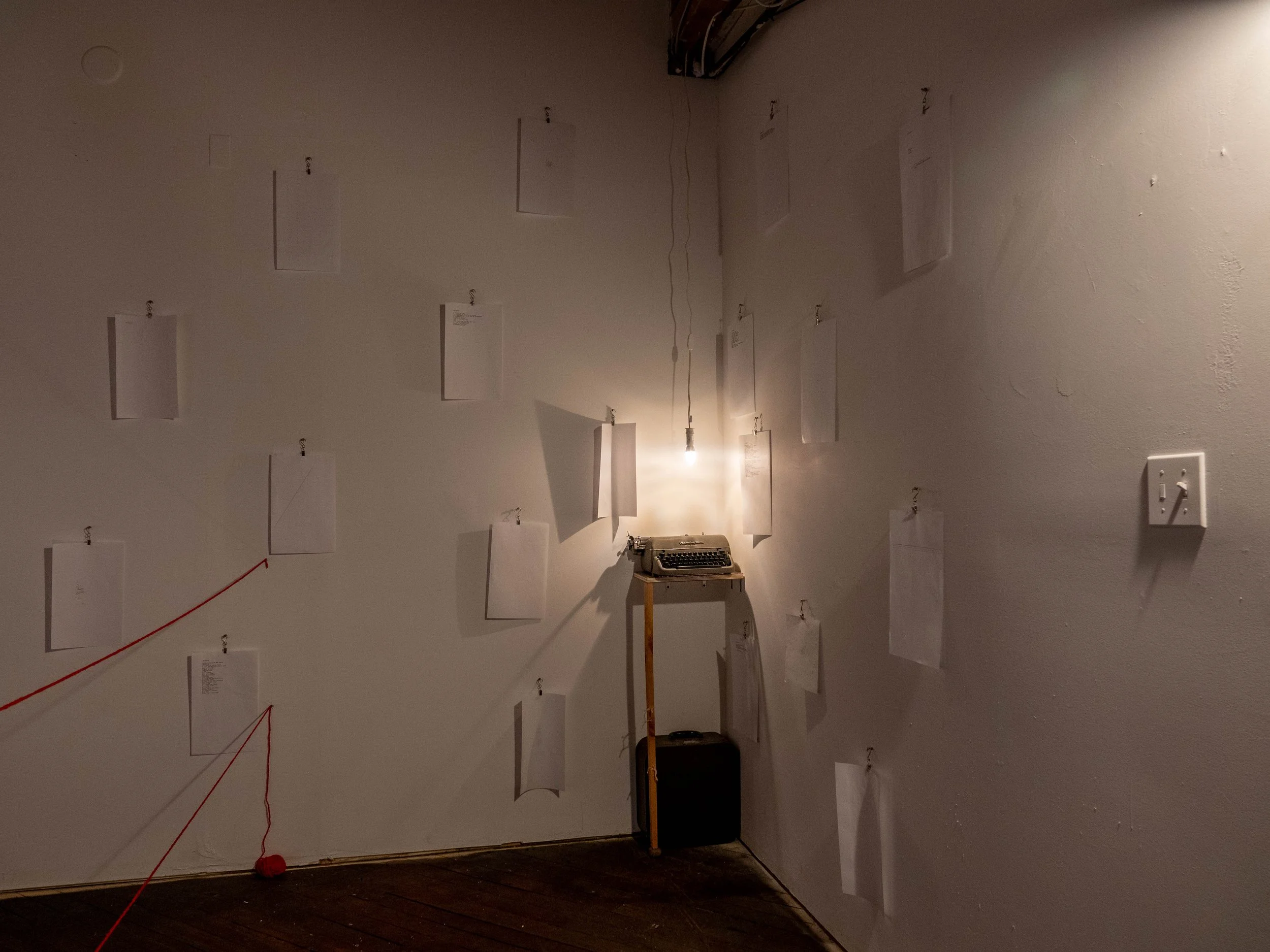
The room was not only filled with wood and stone but also with words. A typewriter sits as a silent witness; its sound amplified into the space. Pages pinned to the wall bore poems, some legible, others faint impressions, ghostly marks barely visible. The typewriter’s rhythm became part of the installation, a percussion of letters, a mechanical angel striking keys that leave traces of language. The faint pages were as essential as the clear ones: they suggested words hovering between presence and absence, like the levitating branch suspended between ground and sky.
Charles Olson wrote that poetry is “energy transferred from where the poet got it… by way of the poem itself.” Meztli’s installation embodies this transfer. Gravity’s energy is not denied but redirected, transformed into balance and suspension. The typewriter’s energy is likewise transferred: from hand to key, from key to page, from page to wall, from wall to viewer. The faint marks are energy dissipated yet still present, like angels whose wings brush the air without leaving a trace.
John Hejduk described angels as architectural presences, figures who inhabit structures and give them soul. Meztli’s beams and branches are precisely such presences. They are not supports but angelic figures, holding weight in impossible ways, inhabiting the architecture of the room with grace. The cable that bows the branch upward is a wing, invisible yet powerful, transforming gravity into levitation.
The installation creates a world where gravity is not denied but reimagined. Heavy beams are held aloft by friction, by cables, by stones, by branches that never touch the ground. Words are held aloft by faint marks, by sounds, by pages pinned to the wall. Everything levitates not by escaping gravity but by negotiating with it, by finding the precise points where weight becomes flight.
In this room, beams hover, words hover, angels hover. And within it all, our sense of balance rises to meet them, listening, calibrating, participating, reminding us that equilibrium is not merely an idea but a knowledge the body already carries, a quiet inheritance, a kind of levitation. For a moment, we feel the world itself floating in space, held in its own improbable poise. And in that recognition, we sense how lightly the world can hold itself, and how lightly we might learn to hold ourselves within it.
David Gersten | December 2025
Founding Director
Arts Letters and Numbers
/media