Long Tone: Thesis Studio with David Gersten / Sovereign Strickland
Laws of Stepp’Don
The Grammar of Sovereign Strickland
Sovereign Strickland’s work enters the room like a voltage, a wild, uncontainable surge of language, rhythm, paint, performance, and lived experience braided into a single, eruptive practice. She is at once rapper, poet, painter, performance artist, and street-wear designer, but these categories dissolve the moment she begins. Her work does not move between disciplines; it commingles them, folds them into each other, dissolves their borders until what remains is a new form altogether, a practice born of survival, refusal, depth of experience, energy, and transformation. Her originality is not stylistic but structural: she has built an entirely new grammar of making, one that emerges from the body outward, from the wound outward, from the beat outward.
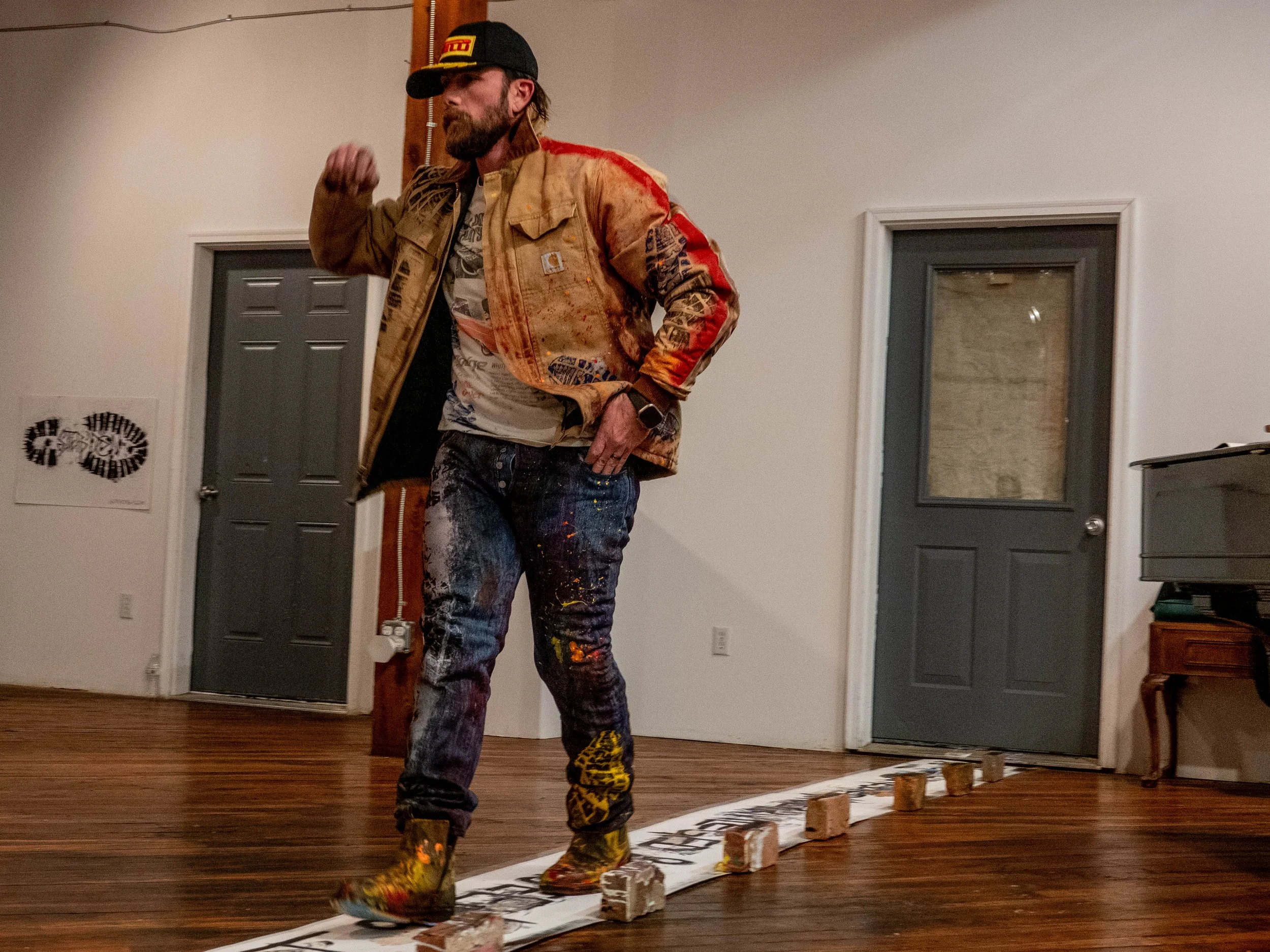
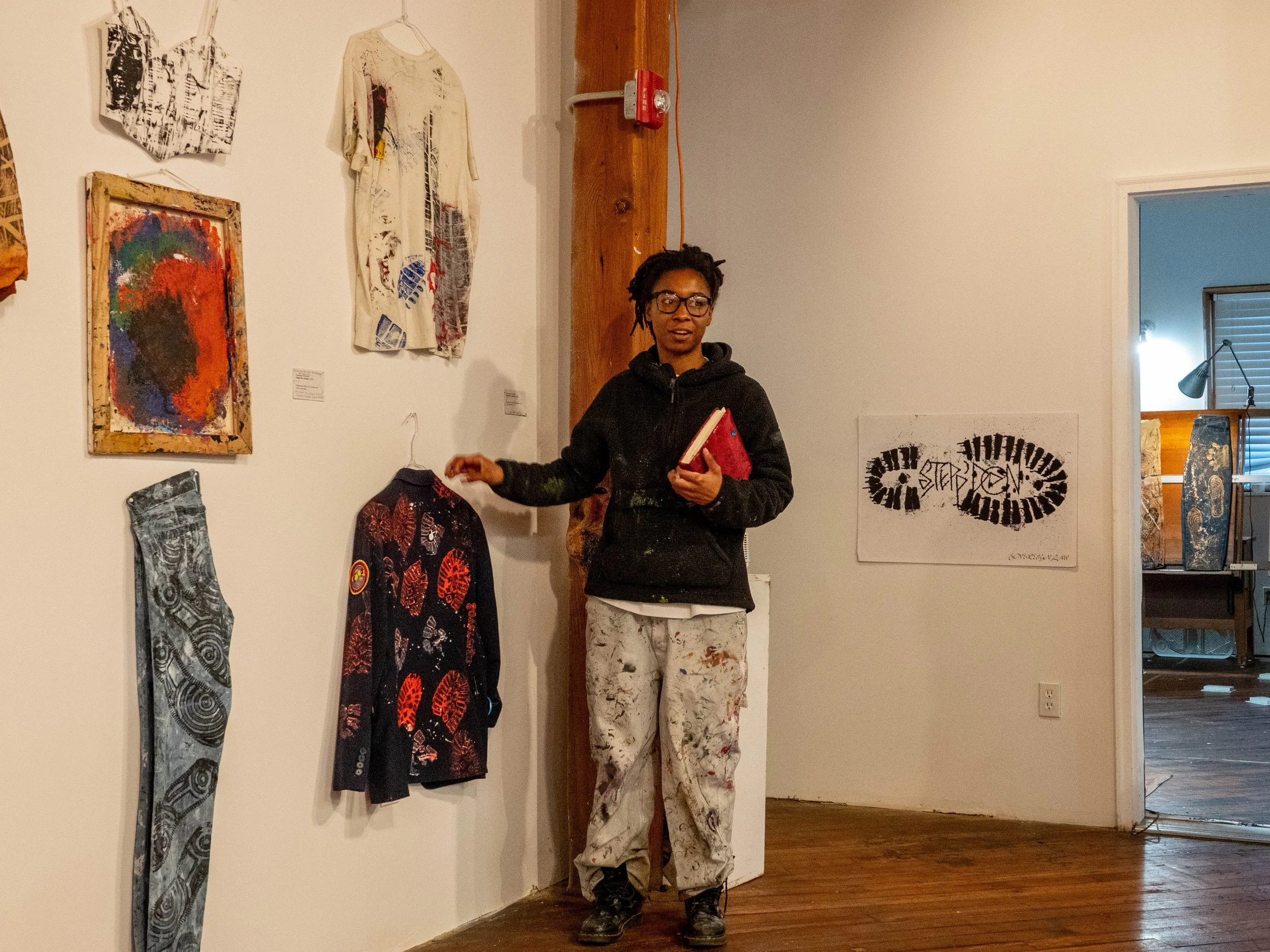
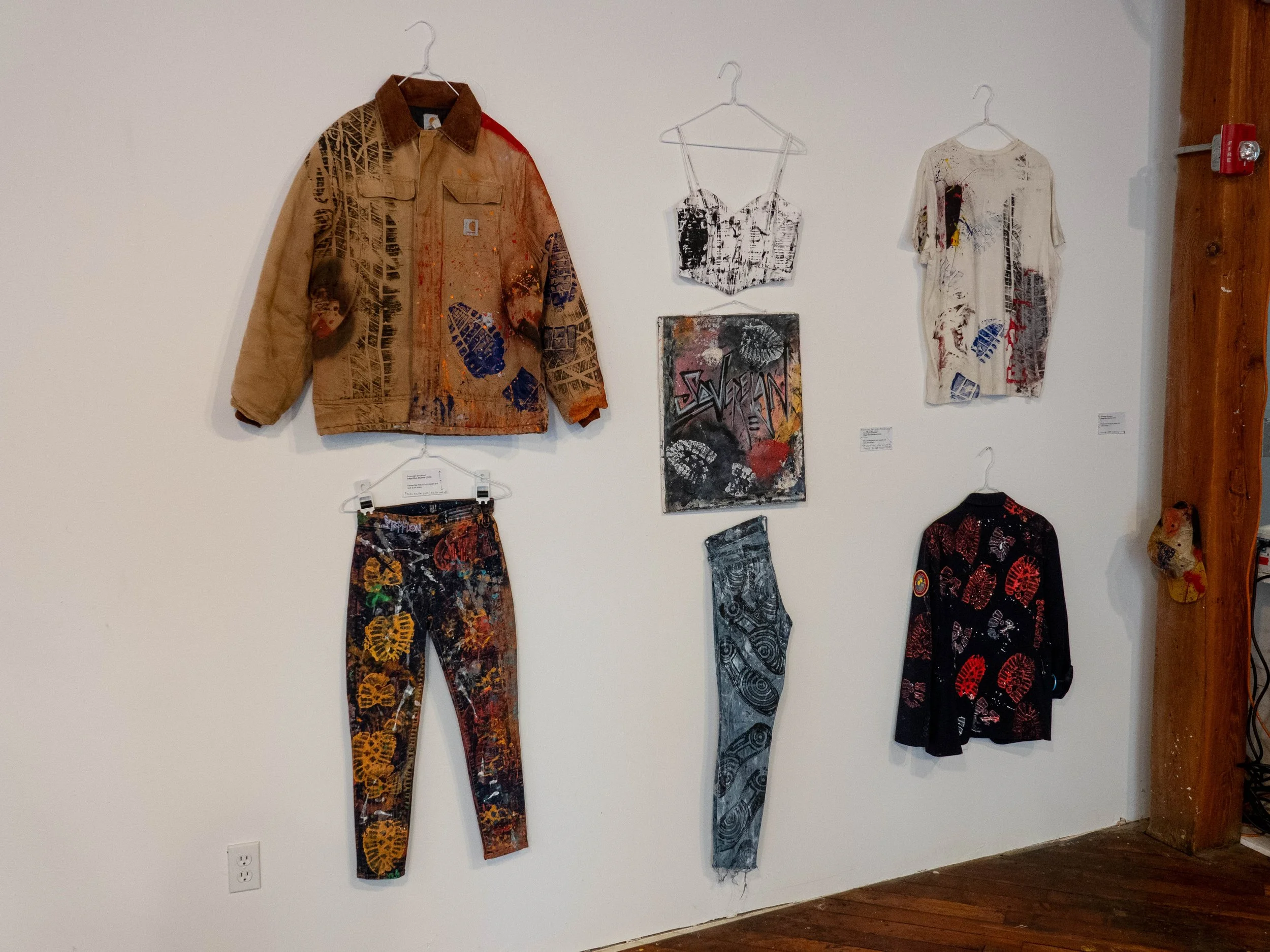
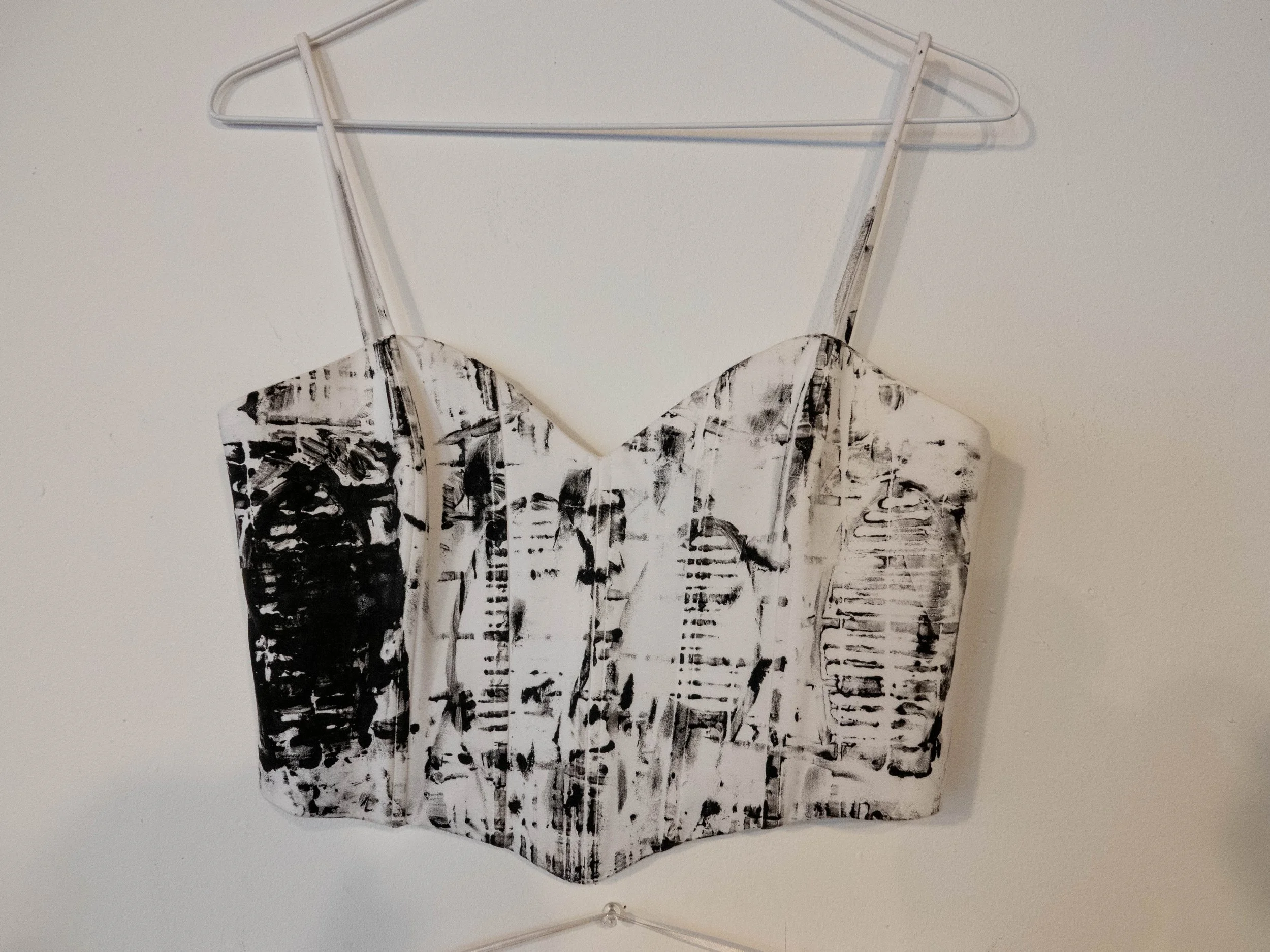
Her street-wear brand, Stepp’Don, carries the weight of its name: to be stepped on, put down, misread, misunderstood, hurt, and to rise through the imprint. The act of stepping becomes both wound and weapon, a choreography of resistance. She often makes her clothing by putting on boots, dipping them in paint, and stepping directly onto the fabric. The sole becomes a stamp, a beat, a biography. The clothing is not decorated; it is impacted, pressed, lived. It carries the force of her body, the rhythm of her steps, the history of being stepped on and the power of stepping back. Each garment is a record of movement, a ledger of pressure, a map of survival.
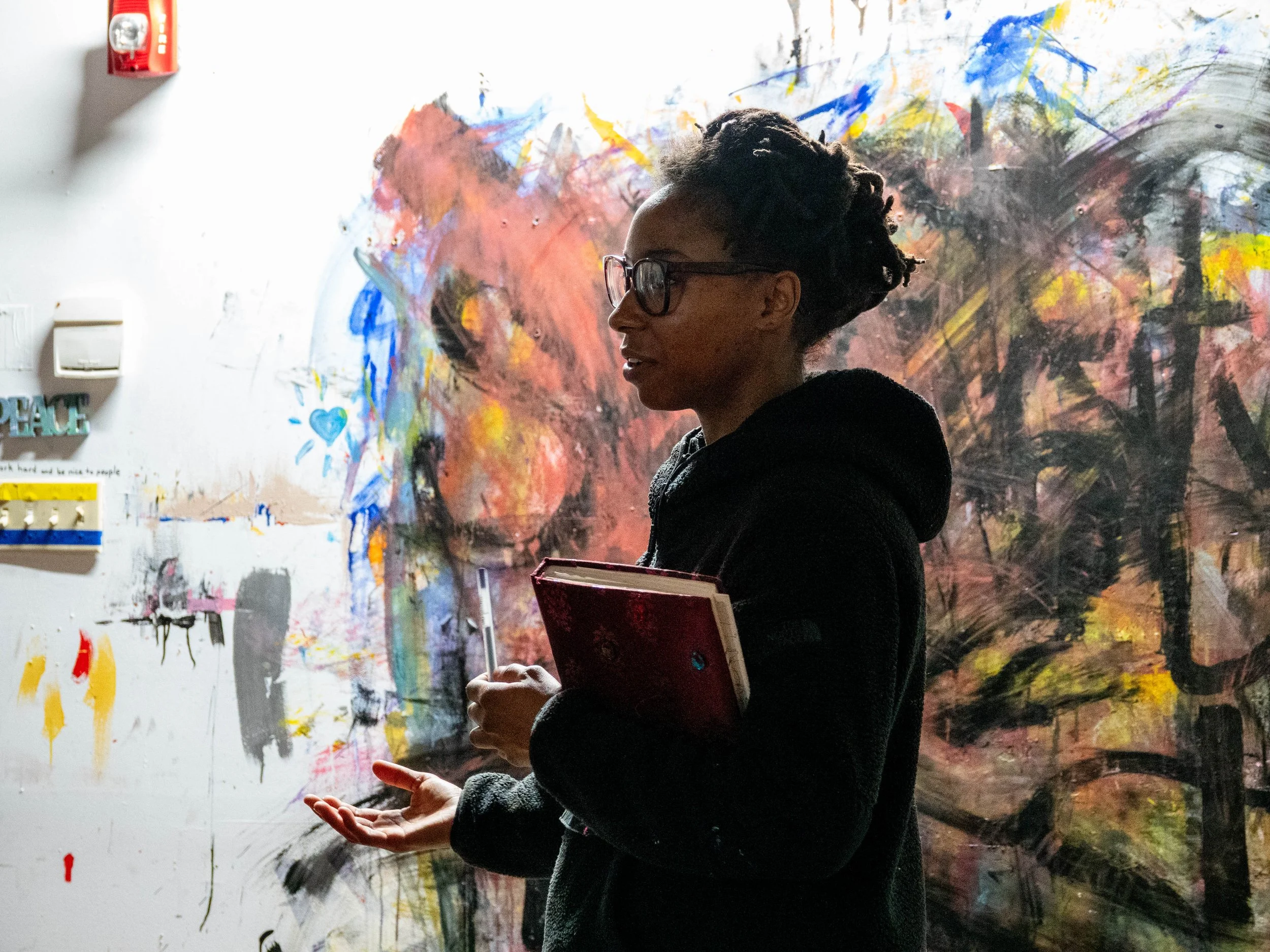
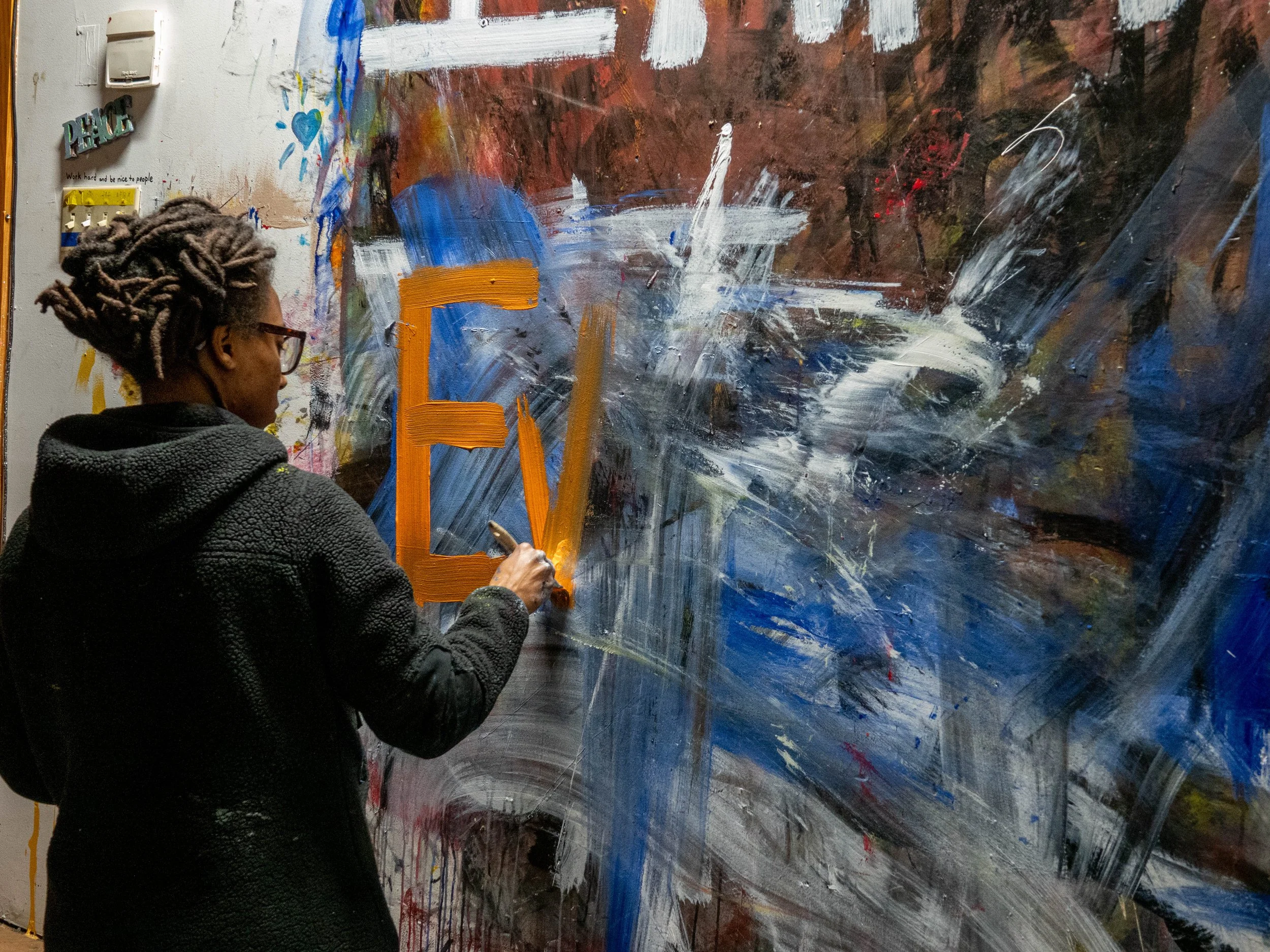
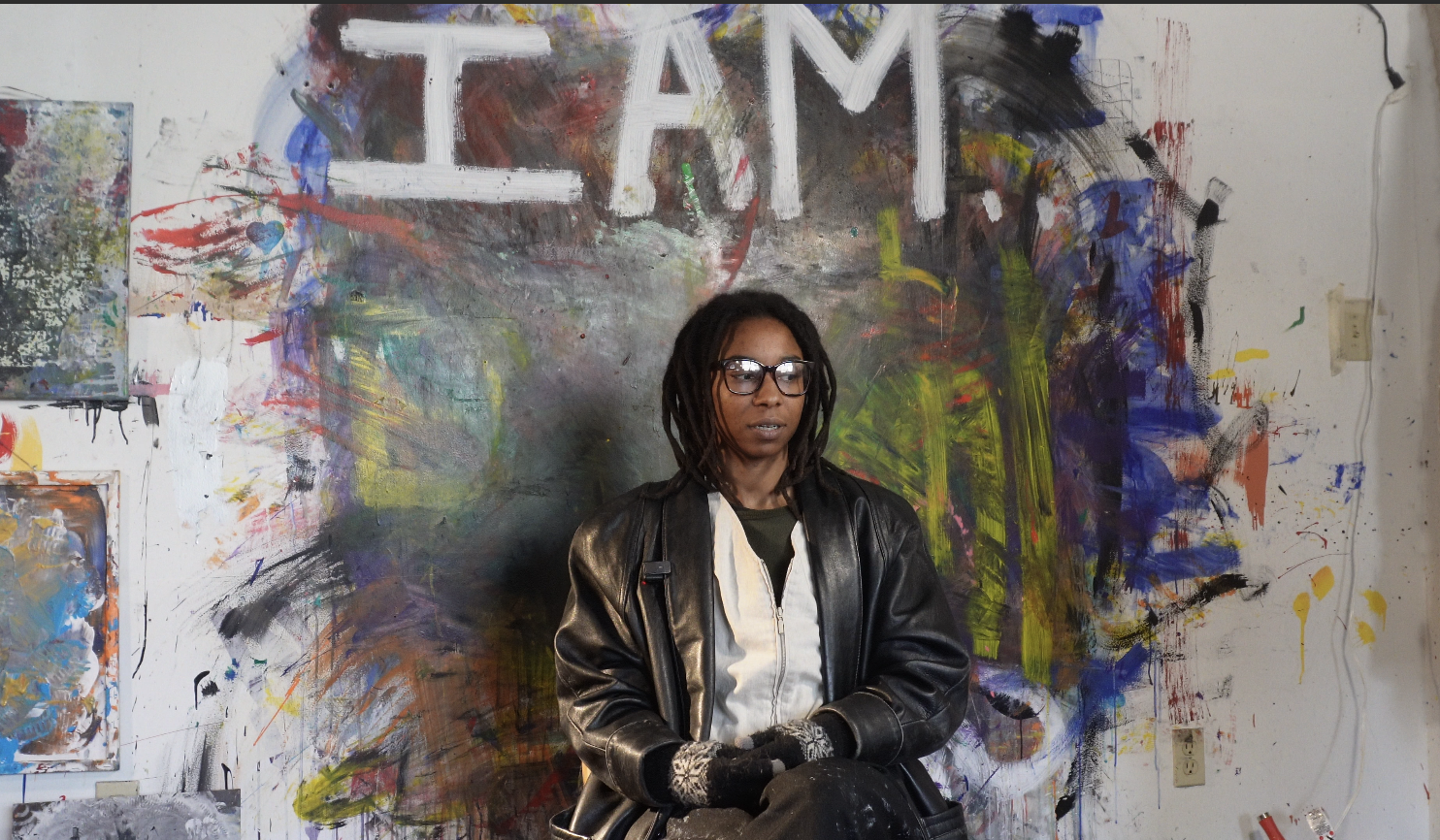
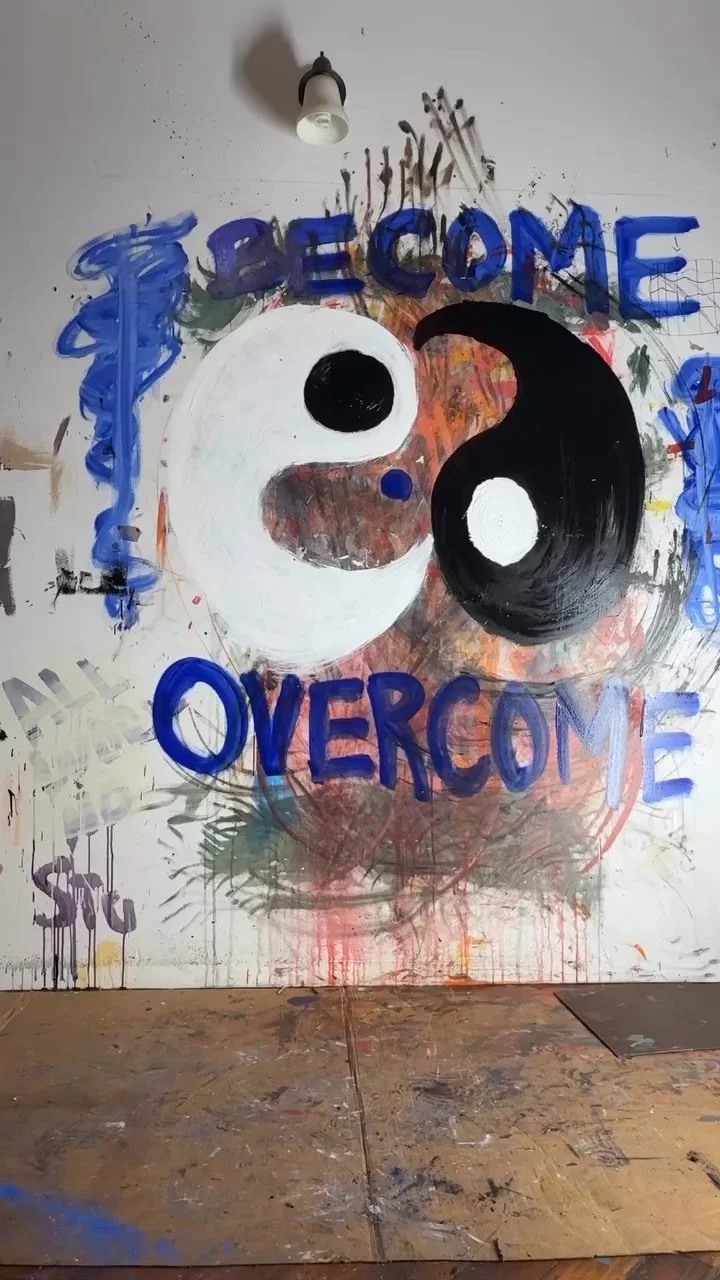
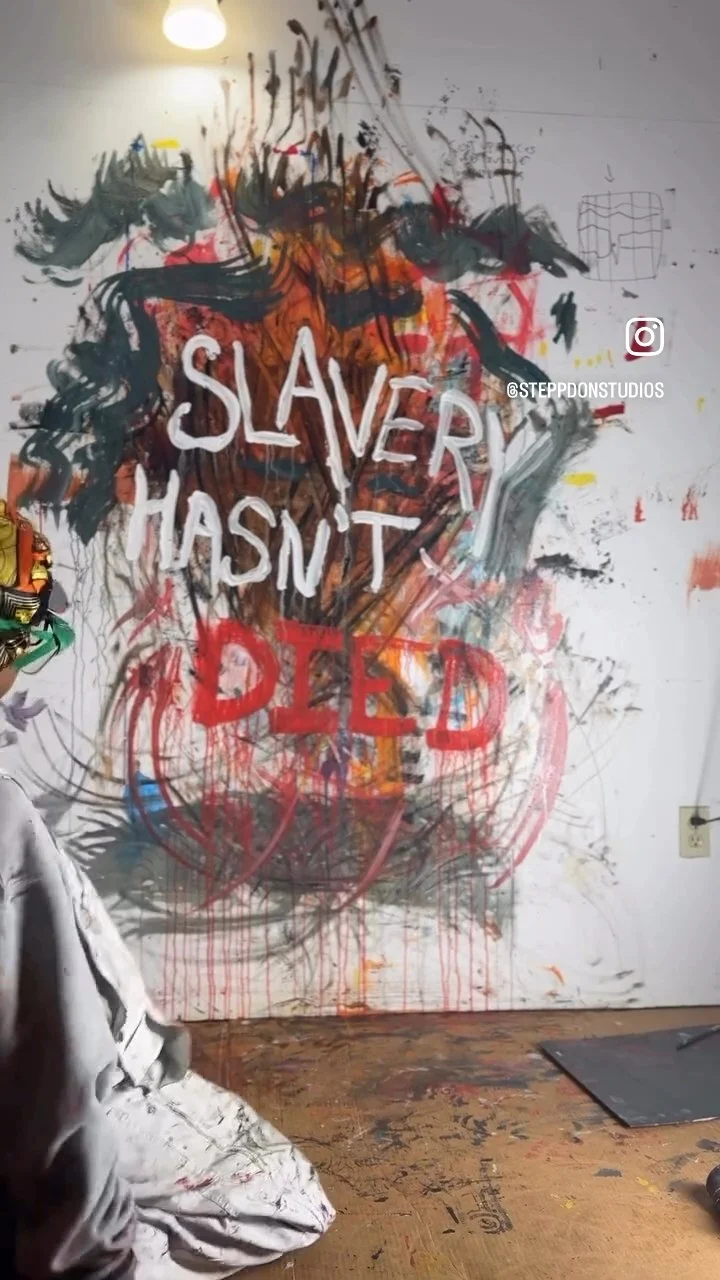
During her time in the Long Tone Studio at Arts Letters & Numbers, Sovereign developed a practice that expanded far beyond clothing. She began painting directly on the wall, large, raw, emotional fields of color, and then writing words into the wet paint. These words were not captions or slogans; they were declarations, ruptures, truths spoken into the room: “slavery hasn’t died” “I am emotional” “I am the canvas” “I am everything and nothing”
“I am Sovereign”.
The words were carved, dragged, pushed into the surface. And then, in a gesture that is part ritual, part exorcism, part choreography, she would take clothing and whip it against the wall, letting the fabric absorb the paint, the words, the force of the gesture.
Sometimes she nailed the clothing to the wall and struck it with a paint brush and metal ruler, a violent, emotional, deeply embodied action. The room became a witness, the wall a participant, the clothing a membrane absorbing impact, language, and paint. She then placed the works on the floor and stepped on them, pressing them into the ground. She filmed these actions and layered her songs over the footage, songs that carry her life inside them. One line, unforgettable in its clarity, declares: “I was stepped on, they could not see me, so I made them put their specs on.”
Her practice is not symbolic; it is somatic. The body is the brush, the drum, the pen, the printing press. The room is the picture plane. The clothing is the page. The action is the poem. And woven through all of it is a profound understanding articulated by Richard Rohr: “pain that is not transformed is transmitted.” Sovereign’s work is the transformation of pain into form, into rhythm, into language, into clothing that carries the force of survival. Her practice interrupts the transmission. It turns harm into heat, pressure into presence, impact into voice. She does not hide the wound; she metabolizes it.
Sovereign often makes clothing for specific people, emerging from conversations that open into shared memory. One man brought her his father’s mechanic overalls after his father passed away. Together they spoke about the father’s life, his hands, his work. Sovereign took a car tire, rolled it in paint, and pressed tire tracks across the fabric, a gesture that was both tribute and transformation. The tracks were not decoration; they were biography, a continuation of the father’s movement through the world, a still life that inhabits life. She gives memory a surface, grief a rhythm, lineage a form.
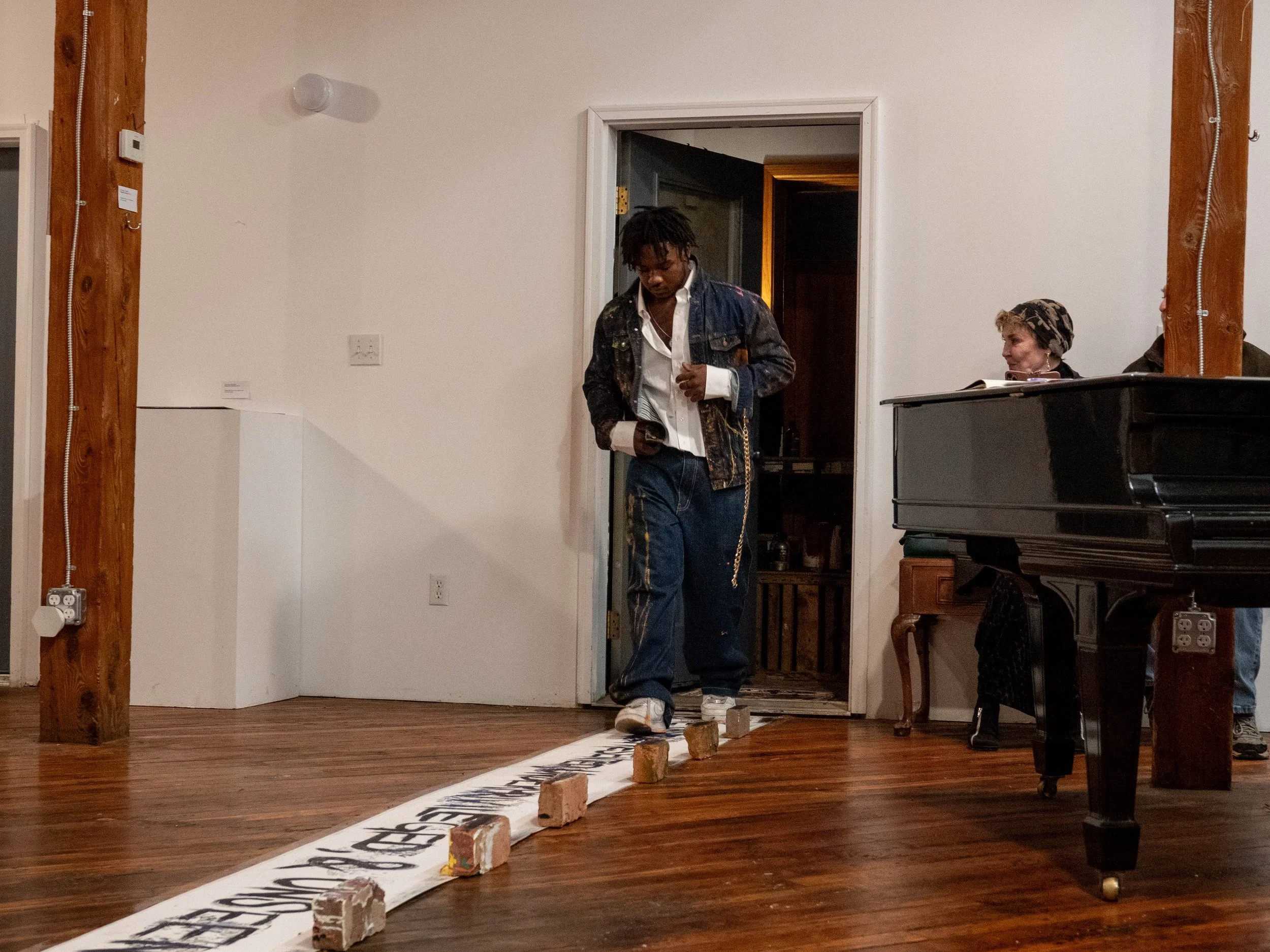
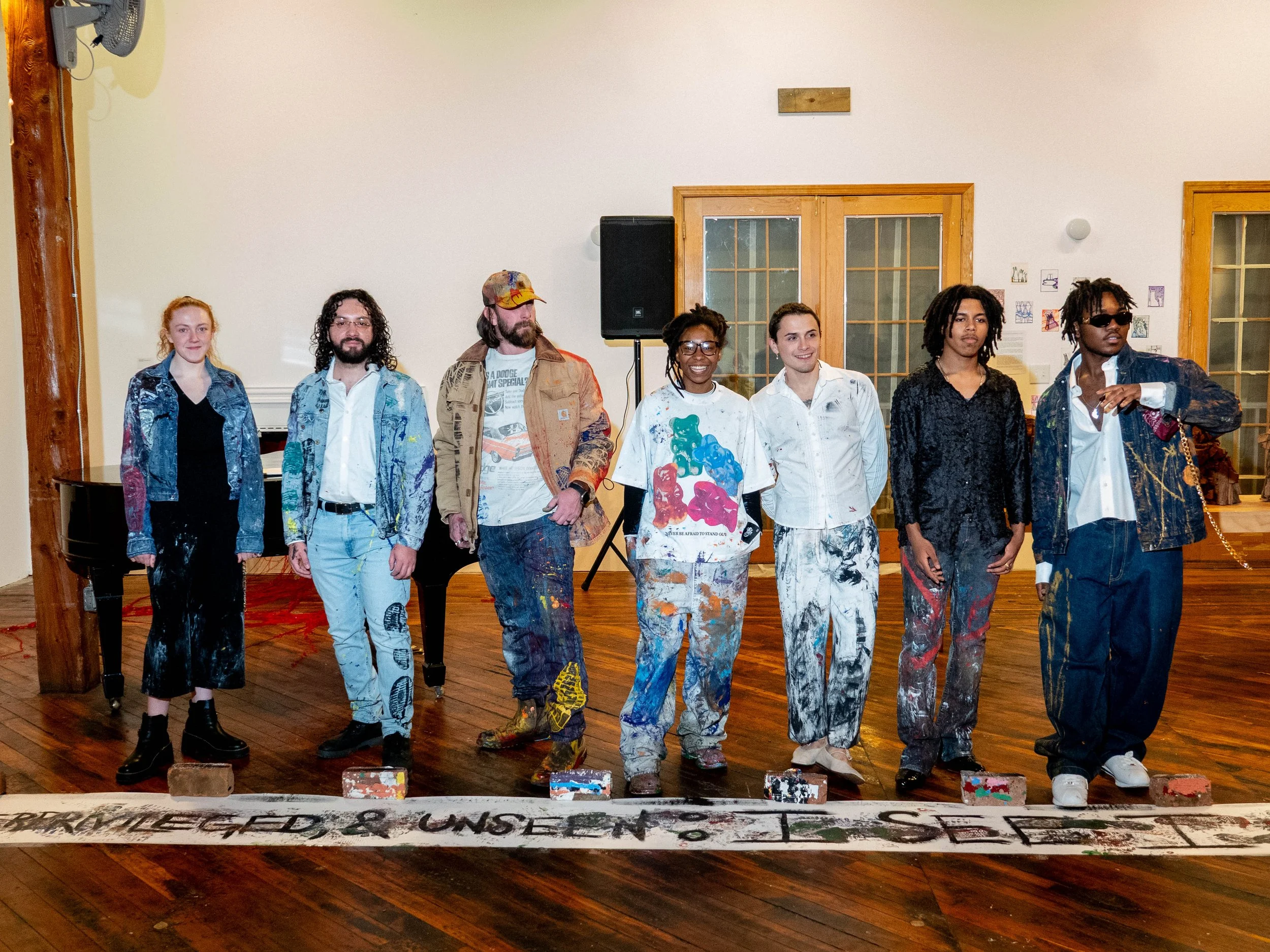
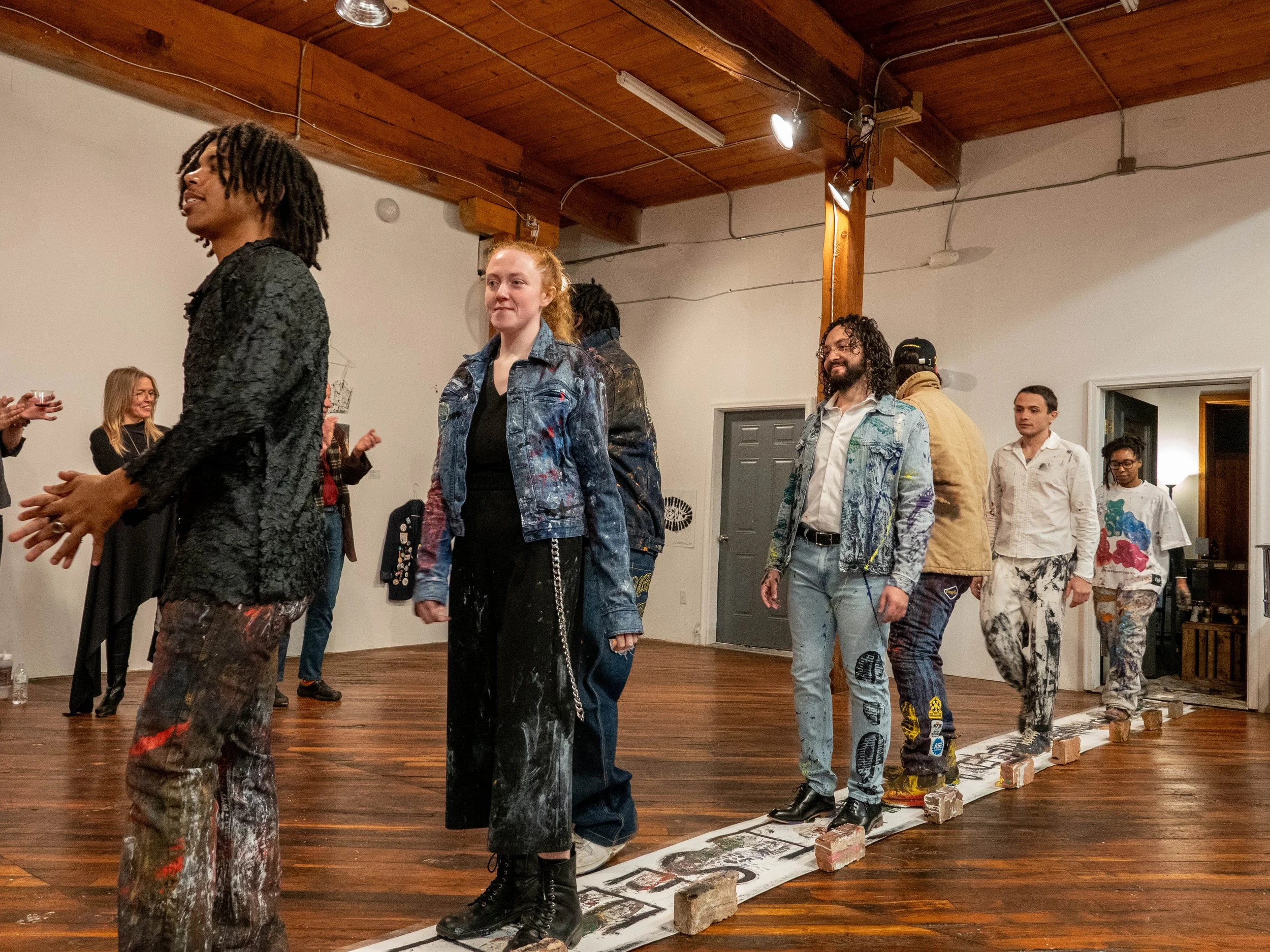
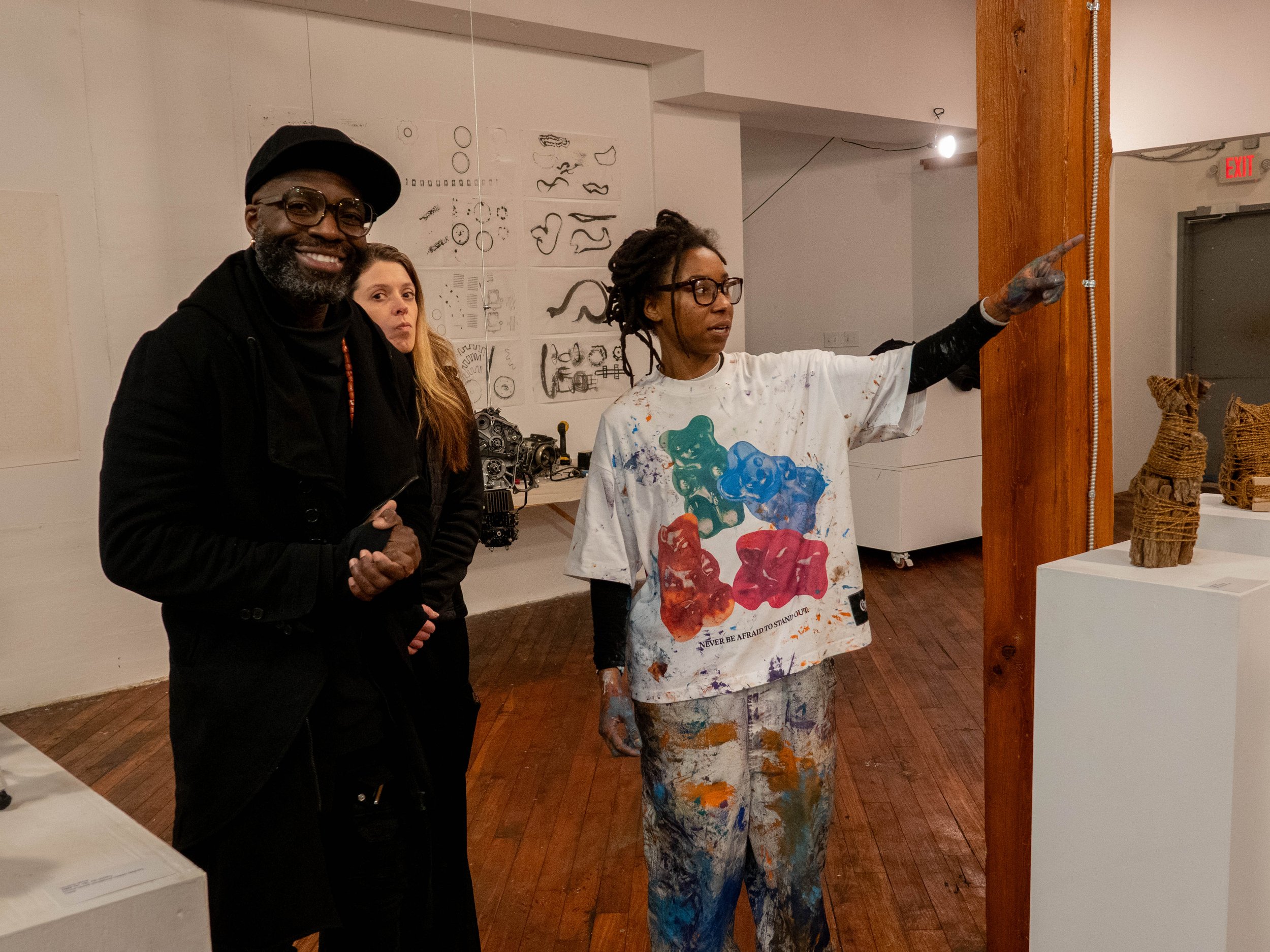
For the final Long Tone exhibition, Sovereign transformed the gallery into a runway, a fashion runway and a runway in the sense of becoming. The works were made live, in real time, in front of the audience. Models stood in the room with her as she painted, stepped, whipped, pressed, and then dressed them. They walked out wearing clothing still wet with process, still vibrating with the energy of its making. The models walked through paint and across a long paper runway, leaving tracks, a communal imprint, a shared mark-making, a choreography of steps that echoed the very name Stepp’Don. The runway became a living page, the models a moving poem, the room a field of relation.
Sovereign has created a practice that is painting without a picture plane, poetry without a page, performance without a stage, fashion that creates its runway. It is a practice where songs, gestures, materials, and emotions converge into a single field of action.
Her work is at once representational and transformational, it registers emotion, as it generates it. It clothes the body while simultaneously giving the body a voice. Moving through it all, is Sovereign’s voice: original, fierce, tender, unfiltered, unmistakably her own. A voice that raps, paints, writes, steps, presses, remembers, listens, a voice that refuses erasure and marks the present, a voice that rises from being stepped on and steps forward with force, clarity, and grace.
In Sovereign’s world, the wall speaks, the floor listens, the clothing writes, and the body remembers, listens and speaks. Her practice is a literacy of impact, rhythm, survival, and becoming. It is the transformation of pain into presence, of pressure into poetry, of harm into heat, fire into fire. This is where Sovereign’s work becomes its own grammar, with its own laws of gravity, creating its own structure of meaning: what steps on you becomes the ground you rise from, and what tries to silence you is transformed into the very voice you speak.
David Gersten | December 2025
Founding Director,
Arts Letters and Numbers
/videos
/photos